One empty shift feels manageable. Until it isn’t. A worker doesn’t show. A manager scrambles. Someone else covers, clocking overtime you didn’t budget for. Service quality dips. The client notices. And somewhere in next month’s payroll, the numbers just don’t add up the way they should. No-shows don’t just leave a shift empty. They cost your business time, money, and trust.
Most operations track the obvious stuff: base labor costs, agency fees, and hourly rates. What they rarely track is the full financial blast radius of a single no-show. In 2025, 89% of event professionals reported that staffing shortages had directly affected their ability to deliver events. The problem isn’t going away. And for teams without the right systems in place, it quietly compounds with every event.
Here’s what this article covers:
- What the hidden cost of no-shows in event and staffing operations actually includes
- The direct and indirect costs that never make it onto the invoice
- How no-shows trigger a chain reaction across overtime, service quality, and client retention
- Why most operations are measuring the wrong thing
- The role of workforce visibility in preventing no-shows before they happen
- Tools and strategies that break the cycle for good
Platforms like Nowsta are purpose-built for exactly this kind of environment: high-stakes, shift-dependent, and zero-margin-for-error. The platform gives operations teams real-time visibility into who confirmed, who clocked in, and who’s at risk of becoming a gap before the event starts.
What the Hidden Cost of No-Shows Actually Includes
Most operations treat a no-show as a scheduling problem. A gap to fill. An inconvenience to absorb.
That framing is costing them real money.
A no-show isn’t just an empty time slot. It’s a compound financial event that triggers costs across multiple departments simultaneously. The problem is that those costs don’t land in one line item. They’re dispersed across payroll, operations, client relations, and future revenue, which makes them easy to undercount and dangerously easy to ignore.
The Two Categories Nobody Fully Tracks
Think of no-show costs in two buckets:
Bucket 1: Immediate, visible costs
- Emergency replacement labor at premium rates
- Overtime paid to staff absorbing the coverage gap
- Manager time spent scrambling for fill-ins instead of running the event
- Last-minute agency fees for short-notice bookings
Bucket 2: Delayed, invisible costs
- Reputational damage from degraded service quality
- Client churn from events that underdelivered
- Lost future contracts from clients who quietly moved on
- The cumulative administrative burden of wasted time spent patching gaps manually, event after event
Booking replacements within two weeks can add 20 to 30% to your standard labor rate. On holiday weekends, that premium can jump as high as 50%. That’s before you factor in overtime, agency surcharges, and the ripple effect on the rest of the shift.
The hidden cost here isn’t just what you spend. It’s also the opportunity cost of what you don’t earn when service quality slips and clients don’t renew.
Why the Number Is Always Bigger Than It Looks
In event economics, a 10-minute delay at the front door doesn’t result in a 10-minute delay at the end of the night. It often results in an hour of overtime. That’s the geometry of no-show costs. Small gaps at the start become large, expensive problems by closing time.
Guest experience failures create long-tail revenue loss. Flow breakdowns lower net promoter scores more than content quality. That means the financial impact of a no-show extends well beyond the shift itself. It affects what clients say about you afterward. And in the event industry, word travels fast.
Pro tip: Before your next event, calculate your true no-show cost using this formula: (emergency labor premium) + (overtime triggered) + (manager hours lost) + (estimated client satisfaction impact). Most operations find the number is 3 to 5x what they assumed.
The Direct and Indirect Costs That Never Hit the Invoice

Here’s a clear breakdown of where the money actually goes when a worker doesn’t show. Some of these show up in payroll. Most don’t show up anywhere.
Direct Costs: The Obvious Ones
| Cost Type | What It Looks Like | Approximate Impact |
|---|---|---|
| Emergency replacement | Last-minute agency fill at premium rates | +20 to 50% above standard rate |
| Unplanned overtime | Remaining staff covering extra hours | 1.5x base hourly rate per OT hour |
| Rush booking fees | Same-week staffing surcharges | +15% or more on total labor cost |
| Agency service fees | 15 to 25% markup on replacement labor | Added to every emergency hire |
Indirect Costs: The Ones That Actually Hurt Long-Term
These are the costs that never make it onto an invoice but absolutely hit your bottom line:
- Wasted resources. Prepped stations, allocated equipment, food and beverage provisioned for a full team. When staff don’t show, those resources sit idle. The cost is already sunk.
- Lost revenue from degraded service. If a bar line becomes chaotic due to understaffing, food and beverage revenue drops immediately. Guests don’t wait. They walk away. That revenue doesn’t come back.
- Administrative drain. Every no-show triggers a manual response: phone calls, texts, emails, and rescheduling. That’s wasted time billed at your managers’ hourly rate, multiplied across every incident.
- Repeat offender blind spots. Without historical data tracking, which workers have the highest no-show rates, you keep booking the same unreliable staff. The problem repeats because the data isn’t there to stop it.
- Client loyalty erosion. A client who experienced a poorly covered event rarely complains directly. They just don’t rebook. That’s lost revenue you’ll never trace back to the original no-show.
The Compounding Factor Most Operations Ignore
Improper allocation and coverage gaps translate to wasted resources, lost revenue, and unnecessary costs that compound across events. The key word there is compound. Each no-show in isolation feels manageable. Ten no-shows across a month of events? That’s a pattern that quietly erodes your margin.
High no-show rates don’t just disrupt schedules. They disrupt your ability to grow. Every dollar spent on emergency coverage is a dollar not invested in better talent, better tools, or better client relationships.
How No-Shows Trigger a Chain Reaction
One person doesn’t show. That’s the starting point. What follows is a chain reaction that, if unmanaged, spreads across your entire operation.
The Chain, Step by Step
Here’s what actually happens after a no-show in a live event environment:
- The gap appears. A shift starts uncovered. The manager finds out in real time, or worse, after the fact.
- Coverage scramble begins. Phone calls go out. Texts fly. Someone gets pulled from another role to fill the gap.
- Service quality drops. The coverage is reactive, not optimal. Guests experience slower service, longer waits, or visible disorganization.
- Overtime triggers. The workers covering the gap push into overtime territory. Unplanned. Unbudgeted.
- Staff morale takes a hit. The team that covered an absent colleague’s responsibilities feels the burden. Over time, this breeds resentment and increases turnover among your most reliable staff.
- The client notices. Not always in a formal complaint, but in the post-event debrief. Or in their decision not to rebook.
- The data disappears. Without a system tracking what happened and why, the root causes never get addressed. The same gap appears at the next event.
The Client Retention Risk Is Real
When key roles are missing, such as security, registration staff, or event coordinators, guests feel neglected or confused, which undermines service quality and damages client satisfaction.
Client satisfaction isn’t a soft metric in this industry. It’s revenue. A single event that underdelivered because of coverage gaps can end a multi-year client relationship. That’s not just an inconvenience. That’s a growth opportunity that closes permanently.
And here’s the part that stings most: last-minute no-shows are the hardest to recover from. The closer to show time, the fewer options you have, and the more expensive every option becomes.
Repeat Offenders Make It Worse
Without systems tracking attendance patterns, repeat offenders stay in your roster. They get booked again. They no-show again. The show rates across your workforce quietly deteriorate because nobody has the historical data to identify and phase out unreliable workers.
This is where smarter scheduling and talent intelligence become more than operational tools. They become financial protection.
Why Most Operations Are Measuring the Wrong Thing

Most event businesses track labor cost as a percentage of revenue. That’s a useful metric. But it’s a lagging indicator. It tells you what happened. It doesn’t tell you why, and it definitely doesn’t help you act before the damage is done.
The Metrics That Actually Matter
Here’s what most operations track versus what they should be tracking:
| What They Track | What They Should Track |
|---|---|
| Total labor spend | Per-event no-show rate by worker |
| Overtime as a payroll line | Overtime triggered specifically by no-shows |
| Agency fees | Emergency vs. planned agency spend |
| Event profitability | Revenue lost per gap in coverage |
| Headcount scheduled | Headcount confirmed and clocked in |
The gap between “scheduled” and “actually showed up” is where the money leaks. And poor communication at the confirmation stage is often what widens that gap.
The Root Causes Nobody Wants to Admit
No-shows happen for reasons. Some are personal. Many are systemic. The most common root causes in event staffing operations include:
- Unclear shift details. Workers receive a booking with incomplete information, no reminders, and no confirmation loop. The shift falls off their radar.
- No confirmation process. Teams assume that a booking equals a commitment. It doesn’t. Confirmed, reminded, and re-confirmed is the standard that actually moves the needle.
- Overreliance on unreliable workers. Without data flagging attendance history, managers book based on availability, not reliability.
- Weak accountability structures. When no-shows carry no documented consequence, the behavior repeats. Repeat offenders learn that not showing up is low-risk.
- No waitlist system to fill gaps. When a cancellation hits, there’s no automated process to pull from a bench of available workers. Everything is manual.
The Measurement Shift That Changes Everything
The operations that reduce no-shows most effectively are the ones that treat attendance data as a key component of their workforce intelligence. They track show rates by worker. They identify patterns before they become problems. And they use advanced analytics to build smarter rosters over time.
Proactive planning isn’t a buzzword. It’s the structural difference between operations that constantly firefight and operations that run clean.
The Role of Workforce Visibility in Preventing No-Shows
Prevention beats recovery. Every time. And prevention requires visibility.
The moment a shift gets confirmed on paper without a real-time system tracking whether that worker actually arrives, you’re operating blind. That’s not a process problem. That’s a visibility problem.
What Visibility Actually Enables
Real-time workforce visibility gives you the ability to:
- See confirmation gaps early. If workers haven’t confirmed 48 hours out, you know. You can act. You can reach out, find a replacement, or pull from a bench before the event starts.
- Send automated reminders at the right times. Clear reminders sent at structured intervals, at booking, 48 hours out, and day-of, dramatically improve attendance rates. Automated reminders remove the dependency on a manager remembering to follow up.
- Track attendance as it happens. GPS-enabled clock-in tells you exactly who showed up, when, and where. Not after payroll. Right now.
- Build a data trail on every worker. Over time, you accumulate attendance records that let you identify repeat offenders, reward reliable workers, and make smarter booking decisions with every event.
Better Communication Closes the Gap
Automated texts, emails, and push notifications sent at multiple points confirm attendance and provide staff with clear opportunities to report conflicts ahead of time. This layered approach keeps everyone accountable and is a game-changer for reducing last-minute cancellations.
Better communication doesn’t mean more phone calls. It means timely nudges built into the workflow, so nothing relies on a manager manually chasing confirmations the night before an event.
The operations that consistently achieve fuller schedules and lower no-show rates aren’t doing it through luck or sheer hustle. They’re doing it through systems that make the scheduling process more reliable from confirmation to clock-in.
How Nowsta Builds Visibility Into the Workflow
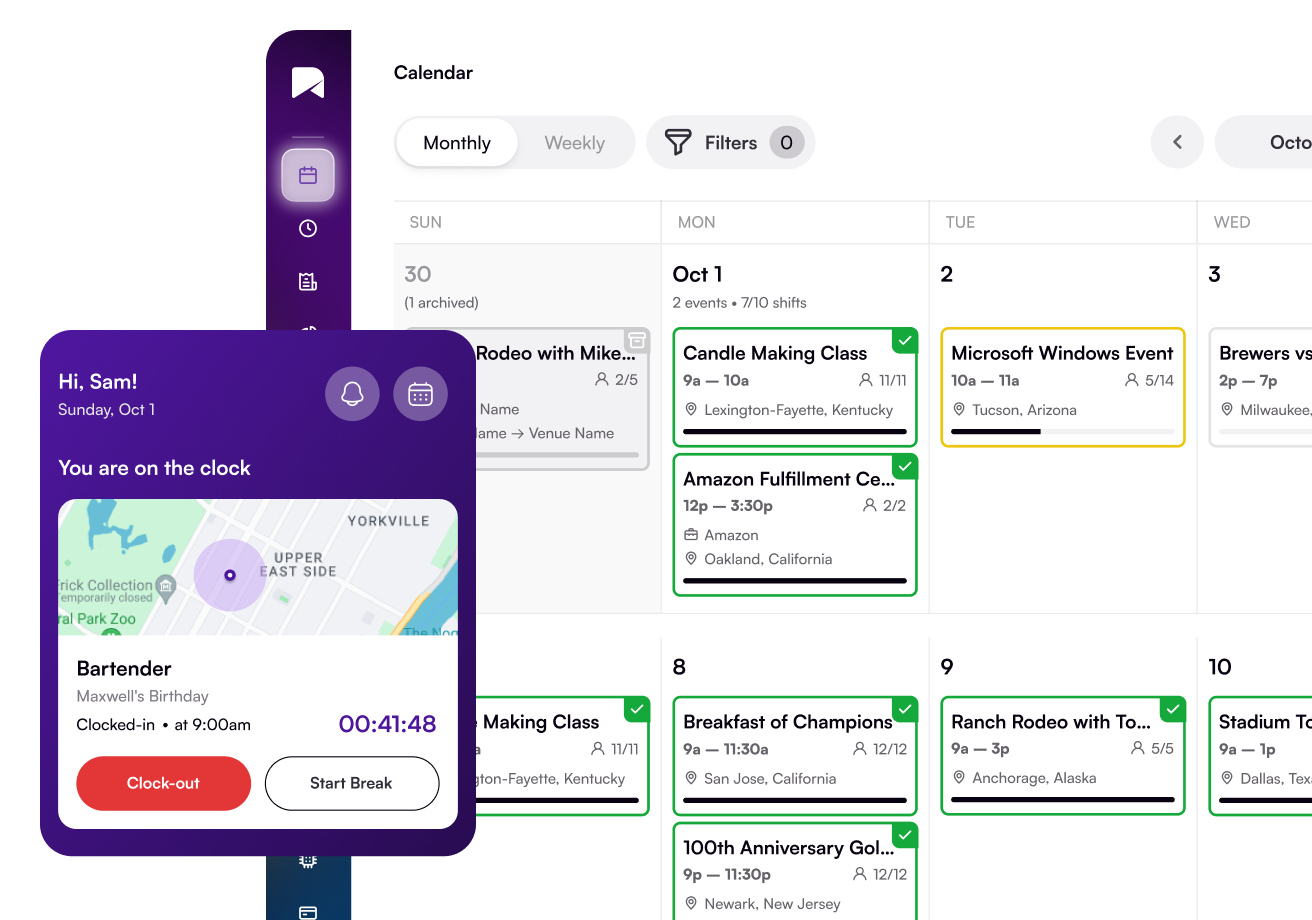
Nowsta’s platform connects the entire staffing lifecycle: schedule, confirm, remind, track, and pay. Workers receive automated shift reminders through the mobile app. Managers get real-time alerts if confirmations are missing or clock-ins don’t happen on time. And every attendance event gets recorded, building the historical data foundation that enables smarter scheduling over time.
That’s not just convenience. That’s a system that actively works to reduce no-shows before they become revenue events.
Tools and Strategies That Break the Cycle for Good

The goal isn’t to eliminate every no-show. That’s not realistic. The goal is to build a system where no-shows are rare, detected early, and never caught you off guard.
Here are the proven strategies and tools that actually break the cycle.
1. Build a Confirmed Bench, Not Just a Schedule
A schedule tells you who’s supposed to show. A bench tells you who’s ready if they don’t. The difference is critical.
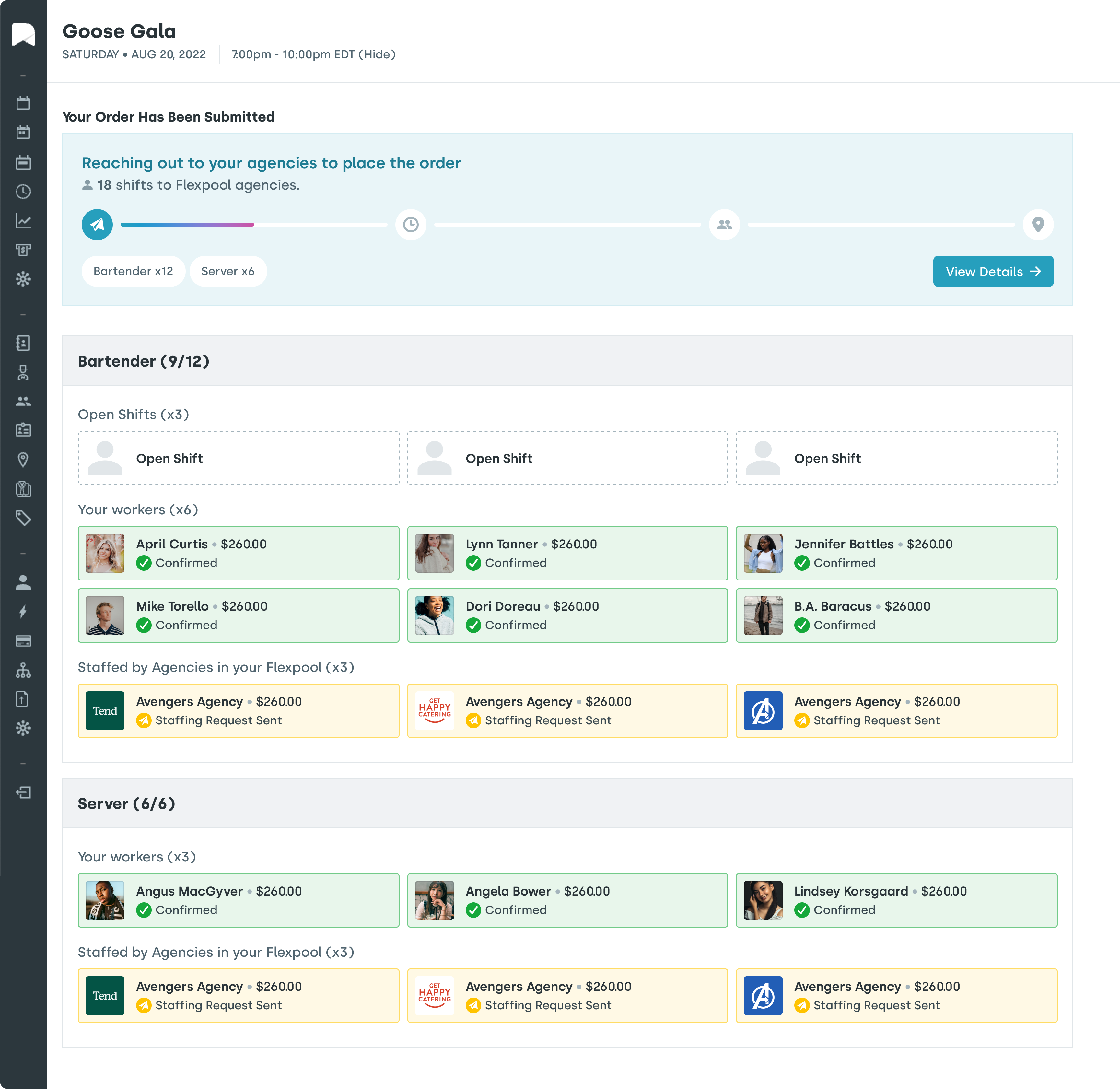
Maintain an active pool of pre-vetted, available workers who can fill gaps on short notice. In Nowsta, this is built into the talent management layer of the platform. When a cancellation hits, you can broadcast to available, qualified workers immediately, without the phone call scramble.
2. Make Automated Reminders Non-Negotiable
A structured reminder sequence is one of the highest-ROI tactics available to boost revenue protection in event staffing. Here’s the sequence that works:
- At booking: Confirmation message with full shift details
- 48 hours out: Reminder with logistics, uniform requirements, and location
- Day of shift: Final check-in nudge with clock-in instructions
This three-touch approach doesn’t just enhance communication. It creates a paper trail of accountability and gives workers multiple clear opportunities to flag conflicts before they become day-of problems.
3. Use Data to Score Worker Reliability
Not all workers carry equal no-show risk. Advanced analytics let you build reliability profiles based on historical data, show rates, cancellation patterns, and notice time when they do cancel. Use that data to:
- Prioritize high-reliability workers for critical shifts
- Identify and address repeat offenders with documentation before they become a pattern
- Build fuller schedules with workers whose track record supports confidence
Nowsta’s talent intelligence does exactly this, ranking workers by performance and reliability so your scheduling decisions are based on data, not gut feel.
4. Create Clear Accountability Structures
No-shows happen more often in environments where there’s no documented consequence. Cancellation policies for workers, clear in the onboarding process, signal that attendance is taken seriously. This doesn’t have to be punitive. It just has to be clear.
Combined with follow-ups after every missed shift, these structures also help identify whether a no-show was a one-time circumstance or the beginning of a pattern.
5. Integrate Scheduling, Time Tracking, and Payroll
The key components of a no-show prevention system aren’t three separate tools. They need to connect. When scheduling feeds directly into time and attendance, which feeds directly into payroll, you get:
- Real-time visibility into who clocked in
- Automatic flagging when expected workers don’t appear
- Accurate labor cost data that reflects what actually happened, not what was planned
This is what Nowsta’s all-in-one platform delivers. One connected system where the scheduling process is informed by attendance data, attendance data informs payroll, and every event makes your next one smarter.
What the Right System Looks Like at a Glance
| Feature | Why It Matters |
|---|---|
| Automated shift reminders | Reduces last-minute no-shows before they happen |
| GPS clock-in with real-time alerts | Catches attendance gaps the moment they occur |
| Worker reliability scoring | Enables smarter scheduling with better-fit staff |
| Bench management and shift broadcasting | Fills gaps fast without premium emergency costs |
| Integrated payroll with attendance data | Ensures accurate costs and compliance every time |
| Historical attendance reporting | Builds the data foundation for continuous improvement |
The operations that lead in this space aren’t the ones working hardest to recover from no-shows. They’re the ones who’ve made no-shows a rare event through proven tactics, smart systems, and a workforce platform built to handle the complexity of shift-based, high-volume, event-driven work.
No-Shows Are Costing You. Nowsta Helps You Take Back Control.
No-show rates don’t fix themselves. The operations that get ahead of them stop treating them as isolated incidents and start treating them as the systemic revenue problem they are. Every empty shift is a choice point: absorb the cost, or build a system that prevents it.
Key takeaways:
- No-shows trigger a chain reaction across overtime, service quality, and client retention
- Direct costs like emergency labor are just the start. Indirect costs hit harder and last longer
- Poor communication and missing confirmation workflows are among the most common reasons no-shows happen
- Historical data on worker reliability is essential for smarter scheduling and fewer surprises
- Automated reminders, real-time clock-in tracking, and bench management are the proven tactics that move the needle
- Operations running fuller schedules treat attendance data as a core business metric, not an afterthought
Nowsta was built for exactly this environment: high-stakes, shift-dependent, and zero tolerance for gaps. From automated shift reminders to real-time attendance tracking and talent reliability scoring, the platform gives your team the tools to stop reacting to no-shows and start preventing them. Your next event doesn’t have to be a gamble. See how Nowsta works and take back control of your workforce.
FAQs
What are the most common reasons no-shows happen in event and staffing operations?
The most common reasons include unclear shift details, no confirmation process, and poor communication. When workers don’t receive automated reminders at just the right times, busy workers juggling multiple gigs simply forget. Better communication systems, not just stricter policies, address the root cause.
How does the hidden cost of no-shows compare across event staffing and healthcare?
The parallel is direct. Patient no-shows cost the U.S. healthcare system an estimated $150 billion annually. Healthcare practices learned to combat missed appointments with appointment reminders, waitlist systems, and structured patient communication. Event operations face the same financial anatomy and need the same systematic response.
Do automated reminders actually reduce no-show rates?
Consistently, yes. Whether managing patient appointments or staff shifts, appointment reminders sent at structured intervals improve show rates across every appointment type. Email reminders, SMS nudges, and day-of confirmations give busy workers clear touchpoints to flag conflicts before they become last-minute no-shows.
What do high-performing operations do differently to improve attendance rates?
They use historical data to identify repeat offenders early, maintain a confirmed bench to fill gaps fast, and send reminders at multiple touchpoints. They also build accountability into their scheduling process so that missed visits are documented, tracked, and factored into future booking decisions.