Most workforce management software gets sold on a feature list. The real question is: who was it actually built for?
Workday is trusted by 60%+ of the Fortune 500. Impressive credentials. But if your operation runs on shifts, hourly workers, or contingent staff, enterprise pedigree doesn’t pay the bills. A platform engineered for desk-based, salaried employees at a global scale doesn’t always survive contact with last-minute no-shows, fluctuating event headcounts, and 30 servers who need to be scheduled and paid by Friday.
So before you commit to a platform, it’s worth asking: Does this thing actually fit my workforce? This post breaks down the Nowsta vs Workday comparison honestly. No fluff, no sales spin.
Here’s what we cover:
- What each platform is and who it’s built for
- Scheduling, time tracking, and compliance compared
- Ease of use and implementation realities
- Which platform wins for shift-based teams
Nowsta is a workforce management platform built specifically for hourly, shift-based, and contingent teams. It combines AI-powered scheduling, GPS-enabled time tracking, payroll integration, and talent sourcing in one interface. No six-figure implementation fees, no six-month onboarding projects.
TL;DR: Quick Comparison of Nowsta vs Workday
| Criterion | Nowsta | Workday |
|---|---|---|
| Best for | Hourly, shift-based, contingent teams | Enterprise salaried workforces |
| AI-powered scheduling | Yes, purpose-built | Yes, as an add-on module |
| Demand forecasting | Yes, event and shift-level | Yes, enterprise-level |
| Attendance tracking | GPS geofenced, real-time alerts | Available, improving |
| Payroll integration | ADP, Paychex, and more | Native payroll module |
| Vendor/agency management | Yes, built-in | Requires Workday VNDLY (separate) |
| Compliance | Operational shift-level | Global enterprise-level |
| Implementation time | Weeks | 6 to 18 months |
| Ease of use | 4.8/5 (Capterra) | 4.3/5 (Capterra) |
| Ideal team size | 20 to 5,000+ shift workers | 1,000+ salaried employees |
What Is Nowsta?
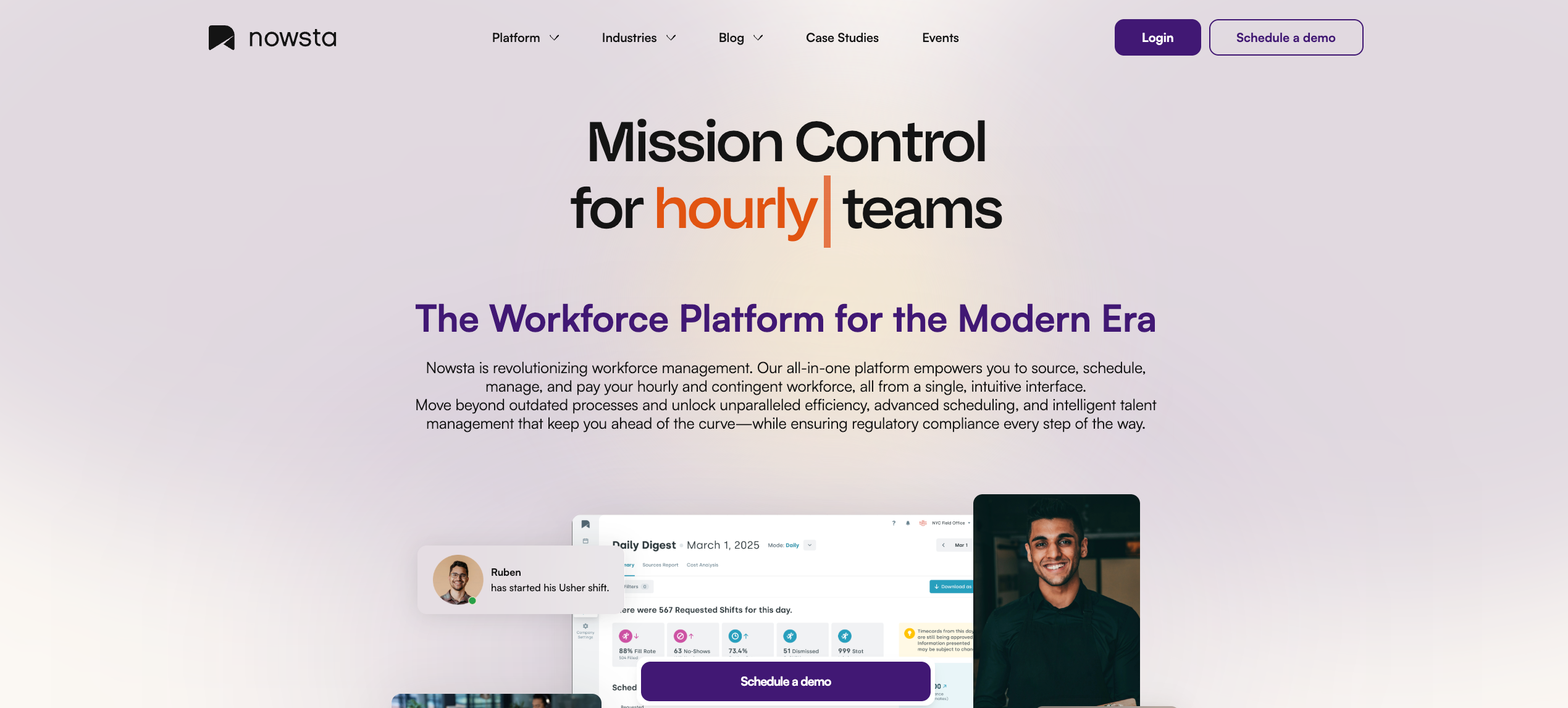
Nowsta is a cloud-based workforce management platform built from the ground up for hourly, shift-based, and contingent workforces. Founded in 2014 and headquartered in Brooklyn, NY, the platform serves over 25,000 teams across industries where shift work is the backbone of operations: catering, hospitality, events, QSR, warehousing, higher education, and home healthcare.
The core idea is simple. Every tool your operations team needs, from sourcing to scheduling, time tracking, compliance, and payroll, lives in one interface. No toggling between systems, no manual exports, no text chains to fill a last-minute open shift.
Who Uses Nowsta?
The platform is purpose-built for businesses managing hourly, part-time, and contingent staff across dynamic, fast-moving environments. That includes:
- Catering and event companies juggling variable headcounts across multiple events per week
- Hotels and hospitality operators managing front-of-house and back-of-house teams across locations
- Quick-service restaurants dealing with high turnover and tight labor cost windows
- Staffing agencies coordinating workers across client sites
- Warehouses and distribution centers running shift-based operations around the clock
- Colleges and universities managing part-time and student workers across departments
If your workforce operates in scheduled shifts and your managers spend hours every week building rosters, this is the audience the platform was built for.
Core Features at a Glance
| Feature | What It Does |
|---|---|
| AI-Powered Scheduling | Builds optimized schedules in minutes using demand forecasting and worker availability |
| GPS Time Tracking | Geofenced clock-in/out via mobile, with automated alerts for late arrivals and no-shows |
| Talent Intelligence | Ranks candidates by skills, certifications, availability, and past performance |
| Payroll Integration | Direct sync with ADP workforce, Paychex, and other providers for accurate, fast payroll exports |
| Vendor Management | Manage staffing agencies and contingent labor partners from a single dashboard |
| Built-in ATS | Source, onboard, and operationalize hourly and contingent staff without a separate tool |
| Instant Pay | Workers access earned wages same-day, improving retention and shift fill rates |
| Mobile Worker App | Workers view schedules, claim shifts, clock in/out, and communicate with managers on iOS and Android |
What Makes It Different
Most workforce management software is either a stripped-down scheduling tool or an enterprise HCM that includes scheduling as an afterthought. Nowsta sits in neither bucket.
It’s purpose-built for operational complexity at the shift level. That means it accounts for the real-world chaos of running a shift-based operation: workers who don’t show up, events that scale up overnight, agencies that need to be briefed and invoiced, and payroll that has to close accurately regardless of how messy the week got.
A few things that stand out in practice:
- Scheduling time cut by up to 80% through AI automation and reusable shift templates
- 28% fewer no-shows through automated reminders and real-time worker communication
- 35% labor cost reduction through smarter forecasting and overtime controls
- 90% faster payroll processing by eliminating manual timesheet exports
- 97% customer satisfaction rate with an average 5-minute support response time
“Nowsta’s platform is so intuitive it has been a lifesaver for staffing our catering events. The ease of use for our team and the communication tools built into the platform save us hours of work each week.” — Verified user review, Software Advice
The Two Core Modules
Nowsta operates across two primary product areas that can work together or independently, depending on your needs:
- Workforce Management: Covers the full internal workforce lifecycle: scheduling, time and attendance, compliance, payroll integration, and employee self-service. This is where the day-to-day operational control lives.
- Vendor Management: Built for operations that rely on staffing agencies and external labor partners. It handles agency sourcing, shift broadcasting, performance tracking, invoice reconciliation, and spend visibility across your entire vendor ecosystem. You can read more about how this works on the vendor management page.
Together, they give operations teams a single system of record for both internal staff and external contingent labor, which is the gap that most enterprise platforms, including Workday, require multiple separate products to fill.
What Is Workday?
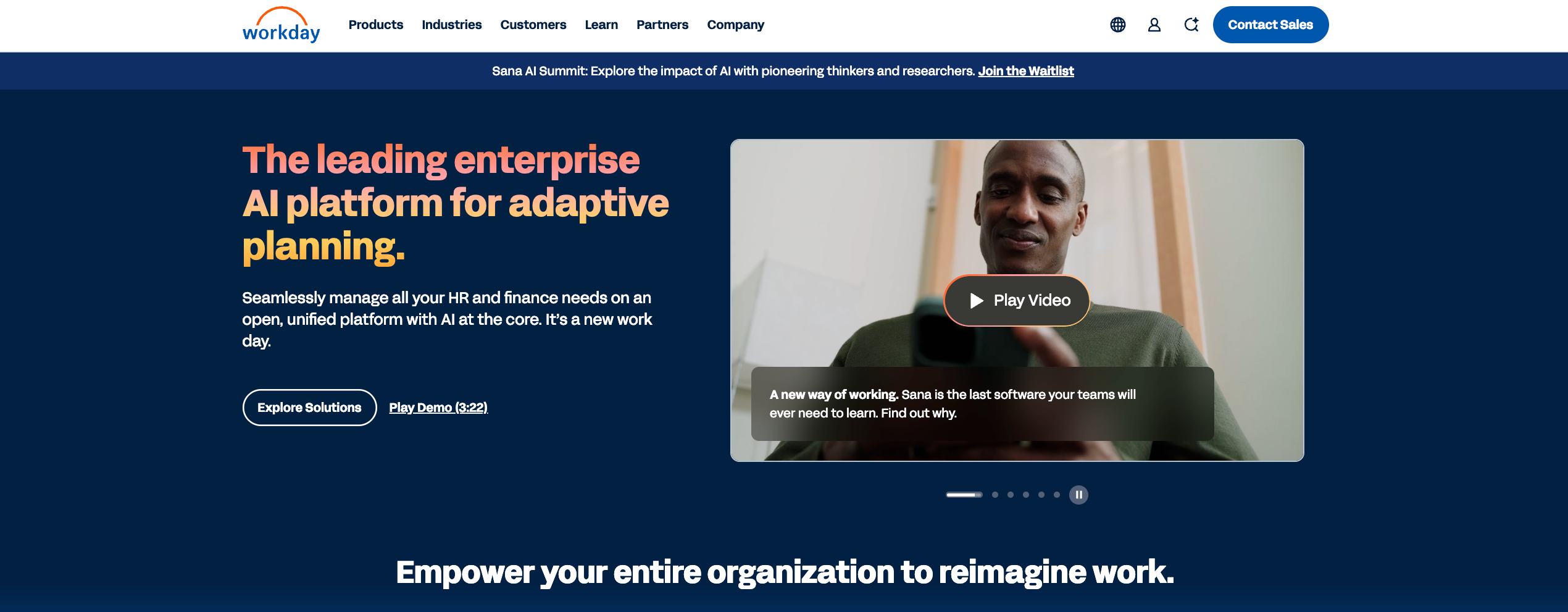
Workday was founded in 2005 by Dave Duffield and Aneel Bhusri, both former PeopleSoft executives who rebuilt enterprise HR from scratch in the cloud after Oracle acquired their previous company. It went public in 2012 at a $9.5 billion valuation and has since grown into one of the most dominant names in enterprise software, with total revenues reaching $8.4 billion in fiscal year 2025.
Today, Workday serves more than 11,000 organizations globally, including over 60% of the Fortune 500. Its core strength is being a unified platform for HR, financial management, and enterprise planning. Think of it as the operating system for large organizations that need to manage salaried, knowledge-based employees across departments, geographies, and compliance frameworks.
What Workday Does Well
At its core, Workday is an HCM (Human Capital Management) suite. Here’s what sits inside that suite:
- Core HR: Employee data, org management, compensation, and benefits administration
- Payroll: Automated tax calculations, multi-state and global payroll processing, and compliance reporting
- Talent Management: Recruiting, onboarding, performance reviews, succession planning, and learning
- Financial Planning: Budgeting, labor cost forecasting, and financial analytics through Workday Adaptive Planning
- Workforce Management: Scheduling, time and attendance tracking, and absence management
- AI and Automation: The 2025 Spring Release added 350+ new features, including AI-powered talent rediscovery, automated accounts payable processing, and the new Workday Agent System of Record for managing AI agents
Who Workday Is Built For
Workday’s sweet spot is the enterprise salaried workforce. Organizations with 1,000+ desk-based employees, complex HR structures, multi-country operations, and robust financial reporting needs. The platform excels at connecting HR and finance data at scale, which is genuinely useful for a global company with a CFO who needs workforce cost visibility next to a balance sheet.
It is not, however, designed around the reality of managing 50 servers for a Saturday night catering event.
Workday at a Glance
| Category | Details |
|---|---|
| Founded | 2005 |
| HQ | Pleasanton, California |
| Customers | 11,000+ organizations globally |
| Fortune 500 Penetration | 60%+ |
| Primary Market | Enterprise (1,000+ employees) |
| Core Focus | HCM, financial management, enterprise planning |
| AI Layer | Workday Illuminate, Agent System of Record |
| Competitors | SAP SuccessFactors, Dayforce HCM, Oracle HCM, UKG |
Scheduling, Time Tracking, and Compliance Compared
This is where the comparison gets real. Both platforms offer scheduling and time and attendance tracking. But the depth, speed, and operational fit are very different.
Scheduling
Nowsta was built for scheduling complexity from day one. Its AI-powered scheduling engine factors in worker availability, certifications, past performance, labor cost thresholds, and event-level demand all at once. Managers can build complete schedules in minutes, not hours.
Key scheduling capabilities on the platform:
- AI-driven shift matching based on skills, availability, and ratings
- Demand forecasting that accounts for event type, historical patterns, and headcount needs
- Reusable shift templates for recurring events
- Open shift broadcasting to a curated talent pool or staffing agency
- Automated reminders and real-time confirmations from workers
- Bulk scheduling actions across multiple events simultaneously
The results speak for themselves. One World Catering now saves over 300 hours per year on scheduling alone. Continental Services cut their time spent on payroll by 90% and saved over 500 hours annually by consolidating scheduling and payroll into one system.
Workday Scheduling, launched as an add-on module to the core HCM platform, does offer ML-based demand forecasting and worker preference matching. For large enterprise environments with relatively predictable work schedules, it works.
But independent reviews consistently note that Workday’s employee scheduling module “exists merely as a recent add-on” and “lacks key features like automatic scheduling” for more complex, event-driven environments. It was built on top of an enterprise HR system, not designed ground-up for operational scheduling speed.
Read more: Scheduling Software vs. Workforce Orchestration Platforms
Time Tracking and Attendance Tracking
| Capability | Nowsta | Workday |
|---|---|---|
| GPS geofenced clock-in/out | Yes, native mobile | Yes, via Time Kiosk (2025) |
| Photo verification on clock-in | Yes | Limited |
| Automated no-show alerts | Yes, real-time | Configurable alerts |
| Offline clock-in support | Limited | Yes, via Time Kiosk |
| Timesheet approval workflow | Automated | Approval chain required |
| Overtime warnings | Real-time | Available |
| Manager mobile access | Web-based | App-based |
Nowsta’s time and attendance tracking is tightly linked to its scheduling layer. When a worker clocks in late or doesn’t show, the manager gets a real-time alert and can act immediately, whether that means calling a backup worker or adjusting labor costs on the fly. That tight operational loop is the difference between knowing about a problem and being able to do something about it before the event starts.
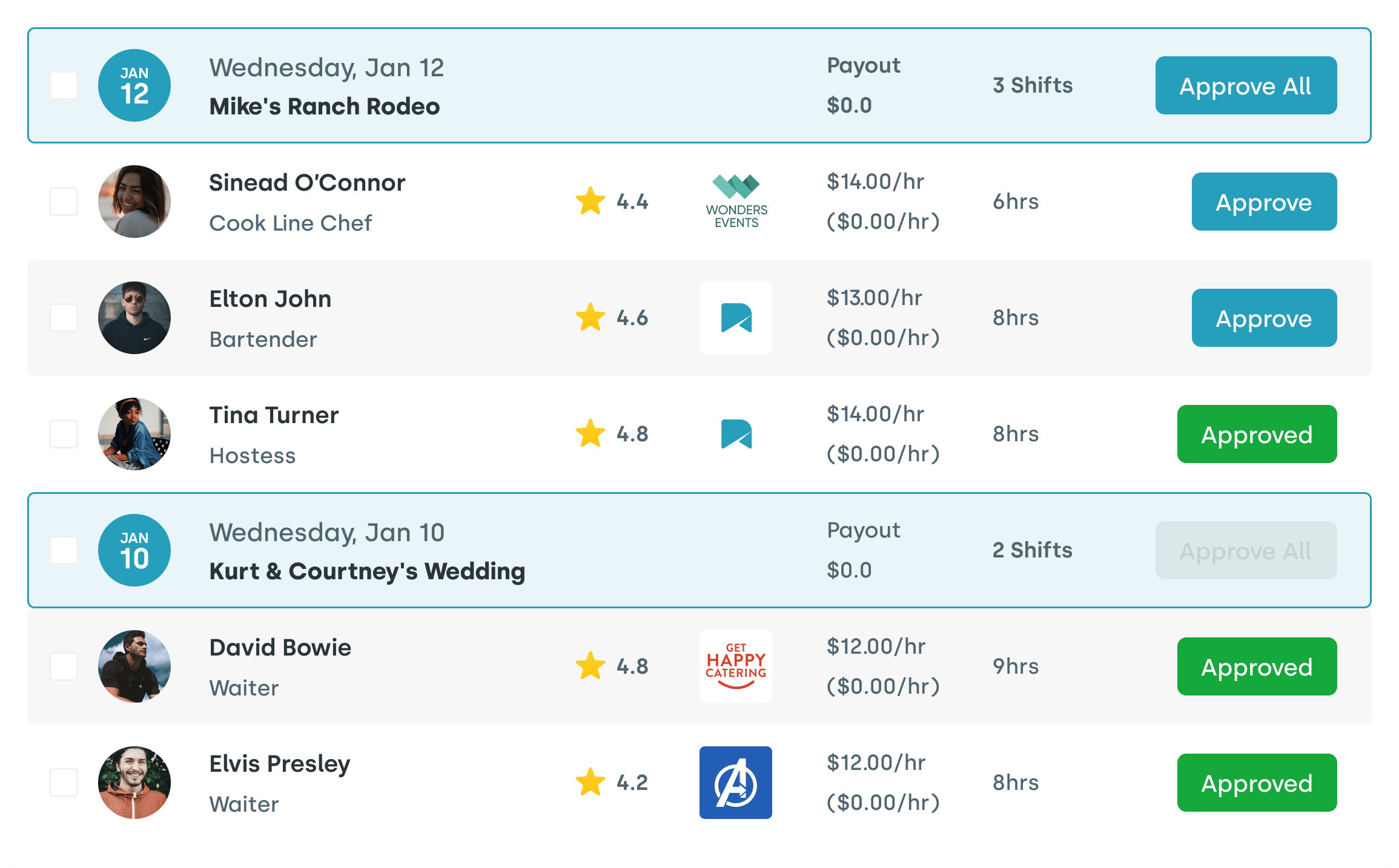
Workday’s time tracking is solid for salaried environments. The 2025 Spring Release added a Time Kiosk that lets frontline workers clock in without internet connectivity, which is a meaningful improvement. But the approval chain process, where status changes require sign-off through multiple layers, remains a friction point for fast-moving operations teams. Multiple G2 reviewers cite “constant overlapping status changes” and complex approval workflows as real-day-to-day frustrations.
Compliance and Labor Law
Both platforms invest seriously in ensuring compliance. Workday’s compliance infrastructure is genuinely comprehensive for global enterprises, covering multi-country tax law, GDPR, HIPAA, and predictive scheduling regulations across dozens of jurisdictions.
Nowsta’s compliance focus is more targeted and operational:
- Automated overtime alerts before thresholds are crossed
- Labor law-aware scheduling that flags violations before shifts are confirmed
- Built-in audit trails for every clock-in, clock-out, and schedule change
- Compliance reporting for contingent and staffing agency workers
For businesses operating in the U.S. hospitality, catering, events, and healthcare industries, Nowsta’s compliance layer covers what actually matters at the shift level. You can read more about how the platform handles this in Nowsta’s compliance solutions for contingent workforce management.
Ease of Use and Implementation Realities
Let’s talk about convenience.
Workday: Powerful, But Demanding
Workday’s depth is both its greatest strength and its most consistent complaint. On G2 and Capterra, the platform’s UI generates genuinely split feedback. Many enterprise HR administrators value its structured workflows and unified data model. But the numbers tell a story: “not user-friendly” and “complex interface” appear in over 30 separate G2 reviews, and “steep learning curve” shows up another 28 times.
Common friction points reported by real users:
- Too many clicks to complete routine tasks like timesheet approvals or schedule changes
- Reporting complexity: Generating custom reports requires knowing the exact report name or bringing in a specialist
- Approval chain dependencies: A single status change can be blocked by an entire chain of unresolved upstream tasks
- No free trial or sandbox access: Workday is a closed ecosystem, meaning organizations commit before they can fully explore
- Training investment: even basic Workday proficiency takes 2 to 3 days of dedicated training, and advanced configuration requires specialist knowledge or a paid implementation partner
Most organizations also need to retain their implementation partner post-go-live, either as a managed services provider or as ongoing consultants, because the platform requires specialized internal expertise to maintain and update. That is a recurring cost most buyers underestimate upfront.
Nowsta: Built for the People Who Actually Use It
The platform earned a 4.8 out of 5 ease-of-use rating on Capterra and received Best Ease of Use badges across workforce management, employee scheduling, time tracking, and attendance tracking categories in both 2024 and 2025.
The reason is practical design. Nowsta was not built for HR directors at Fortune 500 companies. It was built for operations managers at catering companies, warehouse managers, hospital teams, event staffing agencies, and hotel groups who need to fill 40 shifts before Friday and do not have time to learn a new system from scratch.
- Workers access schedules, accept shifts, and clock in through a clean iOS and Android app
- Managers can build and publish a complete schedule in minutes with drag-and-drop controls and bulk actions
- Real-time team communication is built in, no separate messaging tool required
- Payroll integration with ADP, Paychex, and other providers requires no manual exports or data re-entry
Top Notch Staffing, for example, found that Nowsta made scheduling straightforward for their entire team without a long onboarding process. That kind of fast time-to-value is simply not available in an enterprise HCM platform.
Read more: How Large Organizations Transition Off Spreadsheets
Side-by-Side: Implementation Snapshot
| Factor | Nowsta | Workday |
|---|---|---|
| Typical time to go-live | Weeks | 6 to 18 months |
| Implementation cost | Minimal | $300K to $10M+ |
| Training requirement | Low (intuitive design) | High (specialist knowledge needed) |
| Ongoing support model | Dedicated CSM, 5-min avg response | Implementation partner often retained |
| Mobile experience | Full-featured worker app | Improving (Time Kiosk added 2025) |
| Ease of use rating (Capterra) | 4.8 / 5 | 4.3 / 5 |
| Customization complexity | Low to moderate | High |
Which Platform Wins for Shift-Based Teams?
This is not really a close call once you define the question correctly.
Workday wins when you need a single platform to manage your entire enterprise HR and financial planning stack: salaried employees, global compliance, talent management, succession planning, and financial forecasting. If your workforce is primarily desk-based and your organization has the budget, the timeline, and the internal HR expertise to support a multi-year implementation, Workday earns its price.
Nowsta wins every time the workforce is hourly, shift-based, or contingent. If your operations run on events, shifts, or variable headcounts, the platform was built specifically for that reality. Faster to implement, easier to use, purpose-built for labor optimization, and directly connected to the outcomes that matter: fewer no-shows, lower overtime, faster payroll, and more hours back for your team.
The question to ask yourself is not which platform has more features. It is which platform was designed for your workforce. For shift-based teams in catering, hospitality, events, staffing, QSR, warehousing, or healthcare, that answer is Nowsta.
Scratch Gourmet Catering made that shift and modernized their entire staffing operation. Read the full case study here.
Also worth reading: The Role of AI in Workforce Management and Benefits of Workforce Management Software for Enterprises
Your Shift-Based Workforce Deserves Better Than Nowsta vs Workday: Pick the Right Fit
Choosing between Nowsta vs Workday comes down to one honest question: what kind of workforce are you actually running? Enterprise HCM and operational workforce management are two different problems, and using the wrong tool for either is an expensive mistake.
Key takeaways:
- Workday is built for salaried, desk-based enterprise workforces with complex HR and financial planning needs
- Nowsta is purpose-built for hourly, shift-based, and contingent teams in catering, events, hospitality, QSR, and staffing
- Nowsta is operational in weeks, with an intuitive design and a 4.8/5 ease-of-use rating on Capterra
- For shift-based teams, Nowsta delivers 80% faster scheduling, 90% faster payroll, and 28% fewer no-shows
- Workday’s scheduling is a capable add-on, but it was not designed for event-level operational complexity
- Total cost of ownership matters more than the software price alone
If your workforce runs on shifts, Nowsta gives your operations team the tools to actually manage it, without the six-figure implementation bill or the six-month onboarding project. Schedule a demo and see how fast it fits.
FAQs
Who is Workday’s biggest competitor?
Workday’s biggest competitors are SAP SuccessFactors, Oracle HCM Cloud, UKG, and Dayforce HCM. For organizations prioritizing workforce management solutions specifically built for hourly and shift-based teams, Nowsta is the strongest alternative. It trades Workday’s enterprise complexity for operational simplicity, purpose-built labor optimization, and faster time-to-value.
What companies use Nowsta?
Nowsta is used by businesses across catering, hospitality, events, QSR, warehousing, staffing agencies, hotels, and higher education. Customers include Continental Services, One World Catering, Simply Fresh Events, Footers Catering, Top Notch Staffing, and The Pier Sixty Collection in New York City. Most are operations-driven companies that need reliable scheduling, attendance tracking, and payroll tools to boost productivity and control labor costs across shift-based teams.
What AI-powered system is better than Workday for workforce management?
There is no single answer since the right platform depends on your workforce type. For enterprise HR, financial planning, and hiring across salaried teams, Workday remains strong. However, for shift-based and contingent workforces, platforms like Nowsta deliver better operational insights, faster scheduling, and real-time labor cost decision-making without the steep implementation costs. The best workforce management software is the one built for your specific workforce, not the most feature-heavy one.
Is Nowsta better than Workday or ADP Workforce for event staffing?
Yes, for event staffing specifically, Nowsta is the stronger choice. It is purpose-built for the operational demands of shift-based, contingent, and event-driven workforces, where scheduling speed, attendance tracking, and real-time team communication directly affect outcomes.
Workday’s workforce management solutions are designed for enterprise salaried environments, not the fast-moving job requirements of event staffing. Nowsta’s simplicity, AI-powered scheduling, and labor optimization tools help operations teams boost productivity, reduce no-shows, and make faster staffing decisions without the complexity of an enterprise HCM platform.