ADP Workforce Now has been around long enough that many teams treat it as the default. Not the best option, just the one nobody questioned. But default and right are two very different things, and more teams are realizing that every year.
If you’re running into rigid reporting, clunky scheduling, or a support experience that leaves you waiting, you’re not alone. This guide breaks down the best ADP Workforce Now alternatives for workforce management, reviewed honestly so you can make a confident switch.
Here’s what we’ll cover:
- Where ADP Workforce Now falls short for certain teams
- The top alternatives ranked and reviewed
- How each platform handles scheduling, time tracking, and compliance
- Which tools work best for shift-based and hourly workforces
- A purpose-built option most comparison lists never mention
Worth keeping on your radar from the start: Nowsta. It’s an all-in-one workforce management platform built specifically for hourly and contingent workforce operations.
TL;DR: Quick Comparison on ADP Workforce Now Alternatives
| Platform | Best For | Scheduling Depth | Time Tracking | Compliance Tools | Contingent Workforce | Mobile Experience | Implementation Speed |
|---|---|---|---|---|---|---|---|
| Nowsta | Hourly, shift-based, and contingent teams | AI-powered, purpose-built | GPS-verified, geofenced | Automated, real-time alerts | Native vendor management | Mobile-first | Fast |
| UKG Pro | Large enterprises with complex WFM needs | Advanced, demand-based | Multi-method, biometric | Multi-state, union rules | Limited | Strong | Slow |
| Dayforce | Mid-to-large orgs needing real-time payroll | Advanced, demand-based | Mobile, web, time clocks | 200+ countries, continuous | Limited | Strong | Moderate to slow |
| Rippling | HR, IT, and finance unified for growing teams | Basic | Web and mobile | Payroll and HR focused | Limited | Moderate | Moderate |
| Paycor | SMBs needing unified HR and payroll | Basic to moderate | Mobile, web, time clocks | Multi-state payroll | Limited | Strong | Moderate |
| Paycom | Mid-market employee self-service payroll | Basic | Mobile and web | Payroll-focused | Limited | Strong | Moderate |
| Paylocity | Mid-market teams with engagement focus | Basic | Mobile, web, kiosks | Payroll and HR focused | Limited | Strong | Moderate |
| Paychex Flex | SMBs wanting compliance and HR support | Basic | Mobile, web, time clocks | Strong payroll compliance | Limited | Moderate | Moderate |
| isolved | SMBs wanting all-in-one HCM | Basic | Mobile, web, time clocks | HR and payroll focused | Limited | Moderate | Moderate |
| Workday HCM | Global enterprises linking HR to finance | Moderate, heavy config | Mobile and web | 190+ countries | Limited | Moderate | Slow |
| BambooHR | Small teams wanting simple HR | Minimal | Web and mobile | Basic HR compliance | None | Moderate | Fast |
Where ADP Workforce Now Falls Short
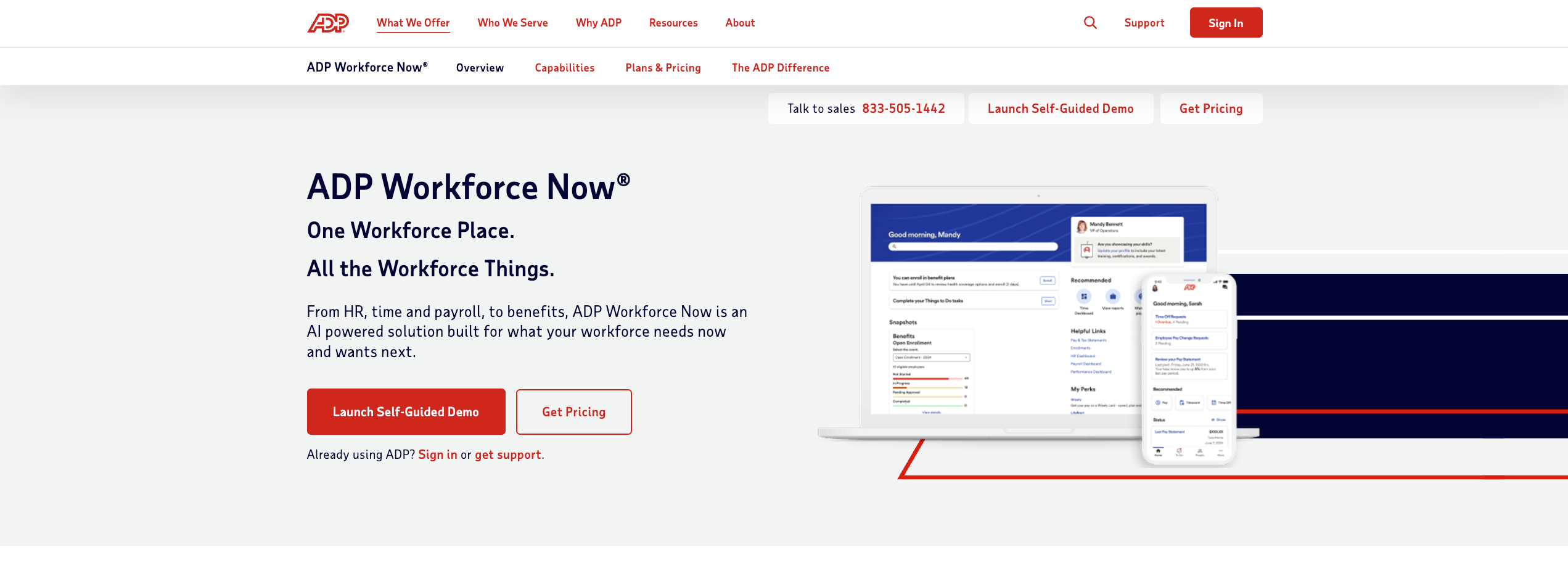
ADP has been in the payroll business since 1949. That history is both a strength and a limitation. The platform carries decades of infrastructure, compliance knowledge, and enterprise trust. It also carries decades of design decisions that haven’t fully kept pace with how modern operations teams actually work.
Here’s where real users consistently flag it falling short.
The Interface Feels Dated
This comes up constantly across user feedback. The system is not very intuitive. Simple tasks often require clicking through four different menus, and the custom report builder feels like it hasn’t been updated in years. For a premium-priced platform, users expect a more modern user interface.
The design feels outdated, not very user-friendly, and doesn’t allow much customization for an organization’s specific needs. Users report it’s hard to find important information when they need it. For managers trying to pull a quick overtime report before a shift, that friction adds up fast.
Customer Support Is Inconsistent
Poor customer support is one of the most frequently cited complaints, with users flagging navigation difficulty and limited customization alongside it.
Once past the implementation phase, getting a straight answer from a human can feel like a maze of tickets and general mailboxes. Users on multi-state payroll or complex compliance setups feel this most acutely. When something breaks mid-payroll cycle, a ticket queue isn’t a good answer.
Reporting Has Real Limits
ADP Workforce Now has reporting tools, but getting them to do what you actually need isn’t straightforward. Some functions are not fully customizable to specific organizational needs, which limits how tailored HR processes and payroll workflows can be.
Pricing lacks transparency, and integration costs with other systems remain high, impacting overall ROI. Teams that need to cross-reference scheduling data with labor costs or pull custom workforce analytics often find themselves working around the system rather than through it.
Scheduling Is an Afterthought
ADP Workforce Now includes scheduling functionality, but it wasn’t designed as a scheduling-first platform. Users consistently note that the scheduling format is inflexible and hard to customize for complex shift patterns. Some users report issues with biometric and mobile clock-ins resulting in inaccurate time records, and in rare cases, time data does not sync correctly with payroll, leading to compensation errors.
For operations managing dozens of shifts across multiple locations or vendors, that’s not a minor inconvenience. It’s a daily operational risk.
The Mobile App Underdelivers
Users report slow and laggy performance, a confusing and restrictive login process, and recurring bugs and glitches as the most commonly flagged issues with the mobile experience.
The mobile app interface can be confusing and hard to use for first-time users, and synchronization issues between mobile and desktop versions can cause data delays. For hourly workers who need to clock in from a job site, that gap matters.
Pricing Lacks Transparency
ADP doesn’t publish pricing publicly, which makes it difficult to evaluate value upfront. Users frequently report unclear pricing, frequent extra charges, and frustration with hidden fees and annual price increases. As teams add modules, those costs compound quickly, especially for growing operations that didn’t budget for additional integrations.
Here’s a summary of the most frequently reported pain points:
| Pain Point | What Users Say |
|---|---|
| Interface | Dated, unintuitive, requires too many clicks for simple tasks |
| Customer support | Inconsistent, slow, and hard to reach after implementation |
| Custom reporting | Limited customization, requires workarounds |
| Scheduling | Inflexible for complex shift patterns, sync issues with payroll |
| Mobile app | Buggy, confusing login, slow performance |
| Pricing | Opaque, extra charges, annual increases |
| Workforce management depth | Payroll-first, not built for shift-based operations |
ADP Workforce Now is a reliable platform for payroll and core HR. But for teams where workforce management is the operational heartbeat, not just an admin function, its limitations show up quickly and often.
The Top ADP Workforce Now Alternatives, Ranked and Reviewed
There’s no universal replacement for ADP Workforce Now. The right alternative depends on how your workforce actually operates, what you need beyond payroll, and how fast you need to get there. Here’s an honest breakdown, starting with the platform most of these lists never mention.
1. Nowsta
Best for: Hourly, shift-based, and contingent workforce operations
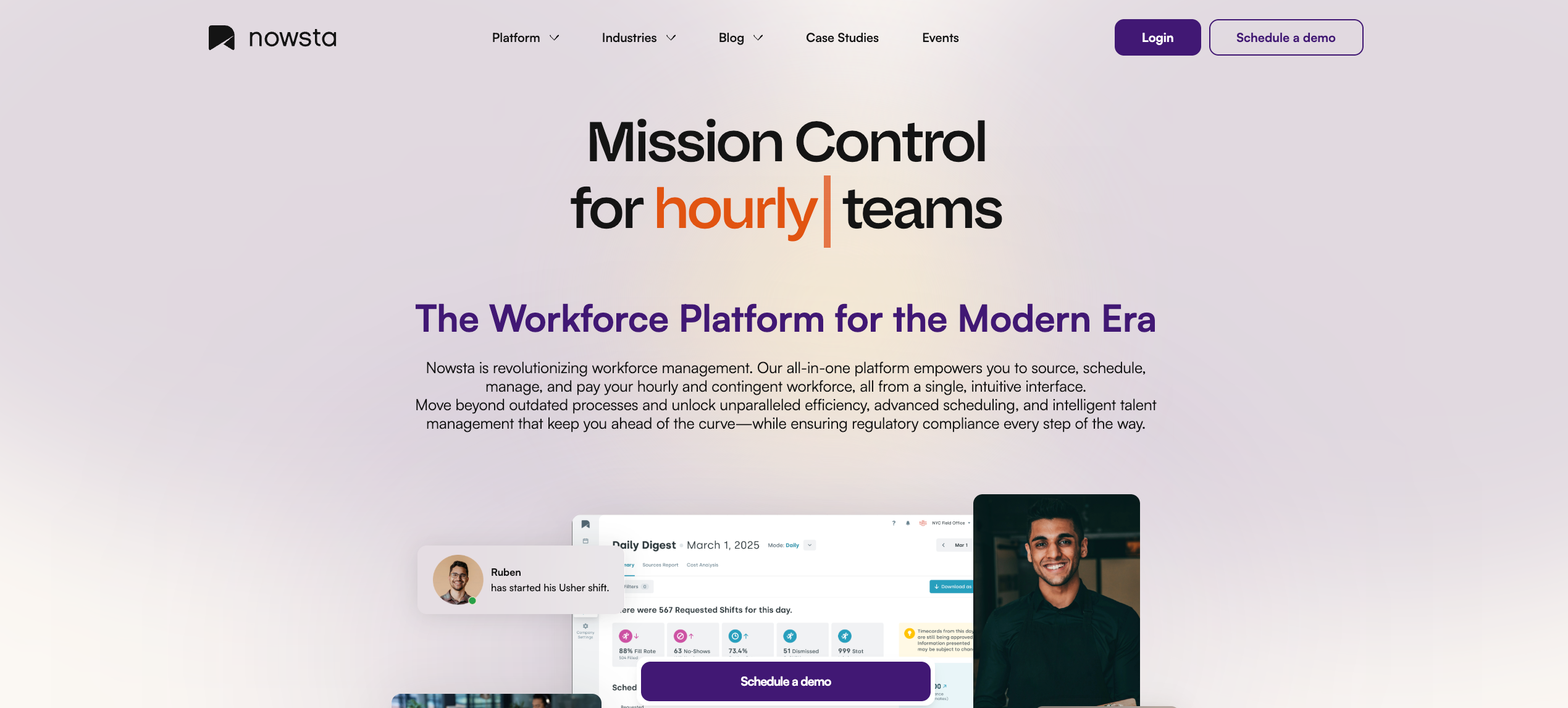
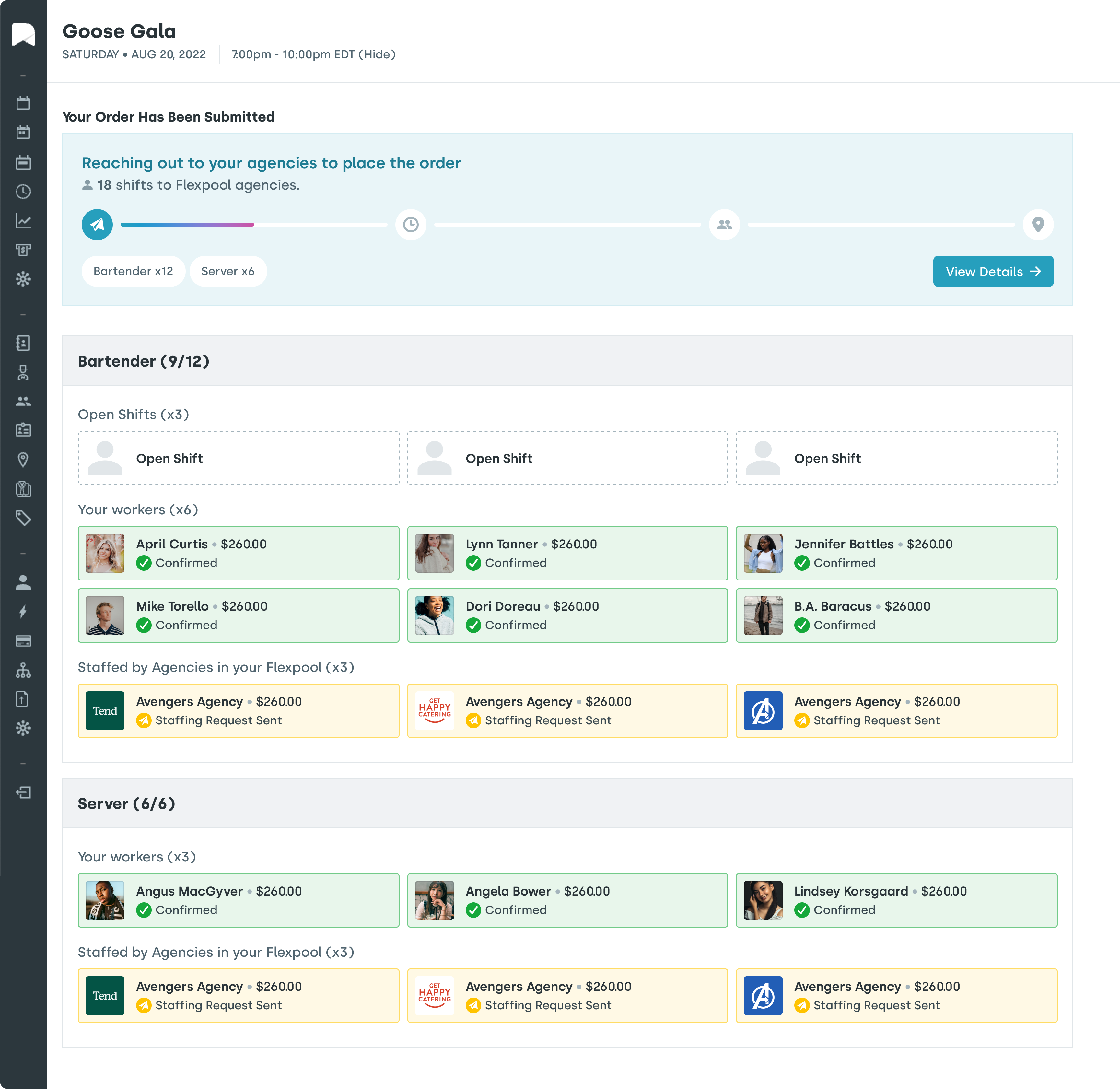
While most alternatives on this list are payroll-first HCM platforms, Nowsta was built from a fundamentally different starting point: the shift. It’s a workforce management platform purpose-built for industries like catering, hospitality, events, warehousing, higher education, and home healthcare, where managing hourly and contingent workers is the entire operation.
Every feature in Nowsta was designed around one question: what does a team managing shift-based workers actually need before, during, and after every shift?
What Nowsta offers:
- AI-powered scheduling that builds optimized, compliant schedules in minutes, reducing scheduling time by up to 80% and saving managers 8+ hours per week
- GPS-verified, geofenced time and attendance that prevents time theft, fires automated no-show alerts, and feeds directly into payroll with 90% faster processing
- Talent intelligence that ranks workers by skills, certifications, availability, and reliability, so the right person is always in the right role
- Native vendor management for contingent workforce operations, covering agency spend, performance, compliance, and invoicing in one system
- Instant Pay for same-day earned wage access, supporting worker retention and shift fill rates
- Customized mobile notifications that drive 35% higher engagement rates and a 28% reduction in no-shows
- Automated compliance monitoring with real-time alerts, built-in audit trails, and labor law enforcement at the scheduling level
- Mobile-first design so workers can view schedules, claim open shifts, clock in, and receive reminders all from their phones
Case Study: Footers Catering
Footers Catering was spending too much time coordinating shifts manually. With Nowsta, they now schedule staff 66% faster.
Read their story →
Nowsta manages over 1 million shift workers across 4,000+ locations with a 4.9 rating on Capterra. For catering, hotels, event professionals, and warehousing operations, this is the platform designed for exactly how they work.
Schedule a demo to see it live.
2. UKG Pro
Best for: Large enterprises with complex scheduling and compliance requirements
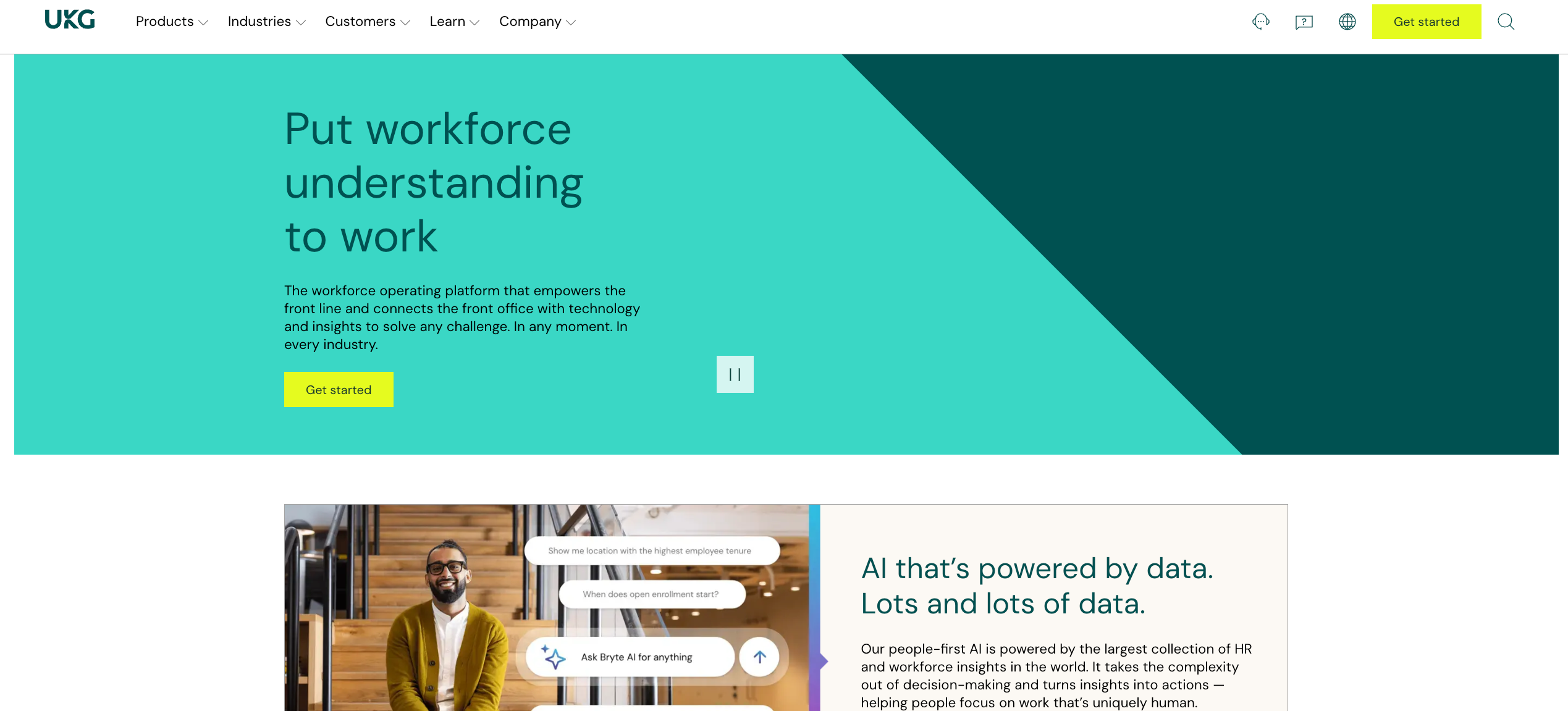
UKG Pro is one of the closest enterprise-level alternatives to ADP Workforce Now in terms of scope and market position. It covers the full HCM suite from HR and payroll through to talent, scheduling, and compliance, with particularly strong depth in shift-based industries like healthcare, retail, and manufacturing.
What UKG Pro offers:
- AI-driven scheduling with demand forecasting and machine learning optimization
- Comprehensive time and attendance with mobile, badge, and biometric clock-in options
- Multi-state, multi-jurisdiction payroll with union pay rule support
- Advanced workforce analytics and customizable reporting dashboards
- Full talent suite covering recruiting, onboarding, performance, and learning management
Considerations:
UKG Pro shares some of ADP’s complexity challenges. Implementation typically runs 3 to 6 months for mid-sized organizations and up to 12 months for larger ones. The learning curve is steep, and configuration changes often require support tickets rather than self-service updates. For teams that want enterprise depth without enterprise overhead, the tradeoff is significant.
Nowsta fills the gap for operations that need scheduling and shift management to move faster than a multi-month implementation timeline allows. With AI-powered scheduling and GPS-verified time tracking live from day one, teams are operational quickly.
3. Dayforce
Best for: Mid-to-large organizations needing real-time global payroll and compliance
Dayforce is one of the strongest direct competitors to ADP Workforce Now in the enterprise HCM space. Its biggest technical differentiator is continuous payroll calculation, meaning every time punch, schedule change, and wage adjustment updates instantly rather than in batch cycles. That real-time accuracy is a genuine advantage for teams where payroll errors have operational consequences.
What Dayforce offers:
- Real-time payroll engine that updates continuously with every workforce change
- AI-assisted scheduling with demand forecasting and labor planning
- Integrated time and attendance with mobile clock-in and compliance enforcement
- Global payroll compliance across 200+ countries and territories
- Talent management covering recruiting, onboarding, and performance
Considerations:
Dayforce comes with the same implementation complexity as most enterprise HCM platforms, typically 4 to 6 months for mid-sized organizations. Its scheduling module can also struggle with complex, high-volume shift patterns. For shift-based operations that need scheduling depth and contingent workforce tools built in natively, Nowsta handles what Dayforce wasn’t architected to do.
4. Rippling
Best for: Growing companies wanting HR, IT, and finance in one system
Rippling takes a different approach from most HCM platforms. Rather than starting with HR and building outward, it connects employee data across HR, IT, payroll, device management, and finance in a single unified system. When a new hire is added, payroll enrollment, IT access, and benefits selection all trigger automatically.
What Rippling offers:
- Unified HRIS connecting HR, payroll, IT device management, and finance
- Workflow automation via a no-code builder across all departments
- Global payroll and employer-of-record services for international teams
- Performance management, learning, surveys, and headcount planning
- 600+ pre-built integrations with third-party tools
Considerations:
Rippling’s time-tracking tools don’t adapt well to irregular or highly variable shift patterns, and its mobile experience doesn’t hold up for frontline workers who need to clock in from a venue or warehouse floor.
Its modular pricing also lacks upfront transparency, which can make budget planning difficult. For teams managing contingent or event-based staffing at scale, Nowsta’s purpose-built approach delivers what Rippling’s generalist architecture can’t.
5. Paycor
Best for: Small to mid-sized businesses needing unified HR and payroll
Paycor has built a strong reputation in the mid-market by making enterprise-level HR and payroll tools accessible to smaller organizations. It covers the full employee lifecycle from recruiting through payroll with a clean interface and strong mobile support.
What Paycor offers:
- Automated payroll with built-in tax compliance across all 50 states
- AI-powered analytics for predicting turnover and leadership performance gaps
- Recruiting, onboarding, learning, and performance management
- Strong mobile app for time tracking, shift management, and self-service
- 400+ native integrations with payroll, benefits, and accounting systems
Considerations:
Paycor’s scheduling and workforce management tools are functional for standard shifts but weren’t built for high-volume, contingent, or event-driven operations. Teams where scheduling is a core daily function will hit limitations quickly, particularly around multi-vendor coordination and real-time labor cost visibility.
6. Paycom
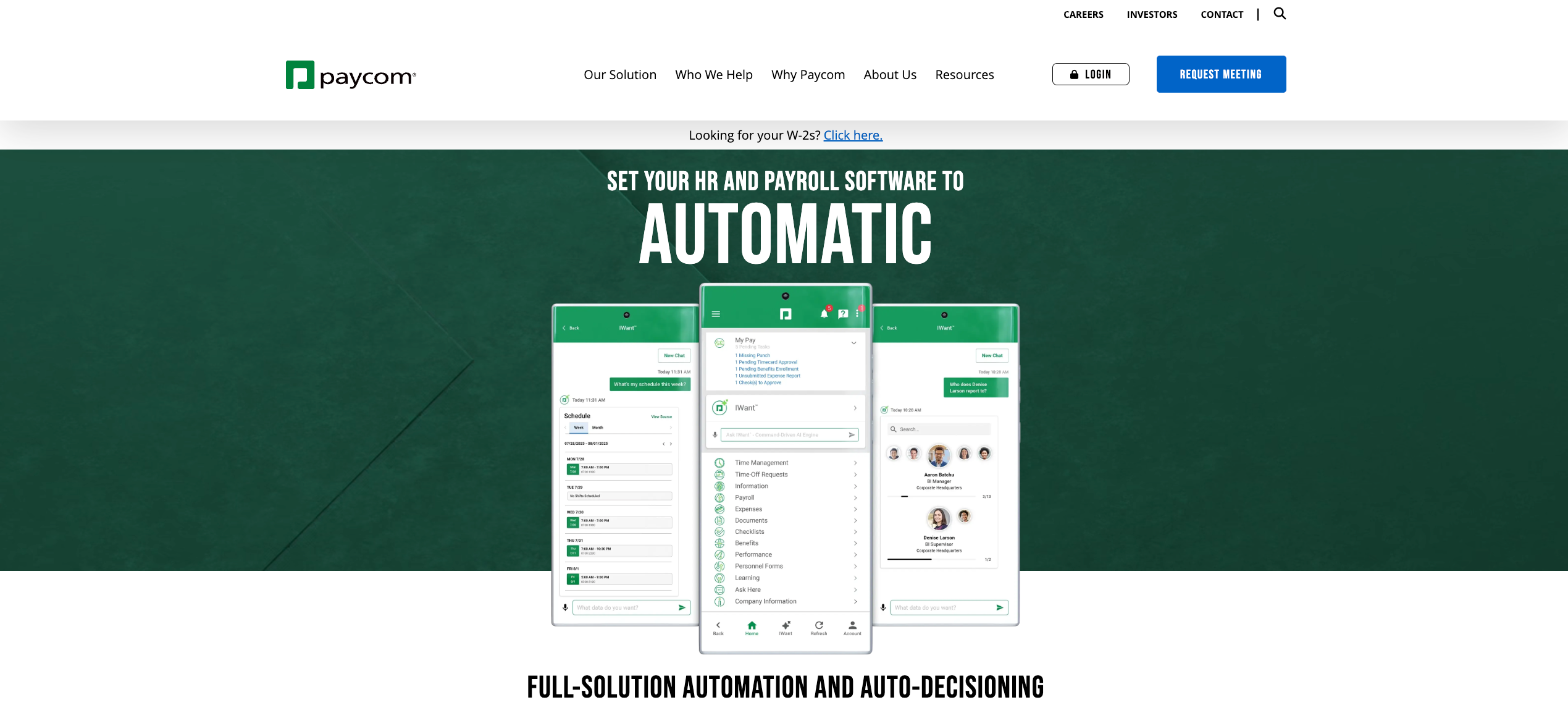
Best for: Mid-market organizations focused on employee self-service payroll
Paycom’s biggest differentiator is Beti, its employee-driven payroll tool that lets workers verify their own pay before it runs. That self-service model reduces payroll errors significantly and cuts the administrative overhead that HR teams typically absorb at pay cycle end.
What Paycom offers:
- Single-database architecture with all HR, payroll, and talent in one system
- Beti self-service payroll automation cutting processing time by up to 90%
- Strong mobile app for time tracking, scheduling, and benefits management
- Talent acquisition, learning management, and performance tools
- Real-time HR analytics for headcount, turnover, and payroll data
Considerations:
Paycom’s workforce management capabilities are functional but limited for complex scheduling environments. Teams managing variable shift patterns, contingent workers, or multi-location event staffing will find its WFM depth falls short of what a purpose-built tool delivers. It works best for organizations where payroll accuracy is the primary driver and scheduling complexity is low.
7. Paylocity
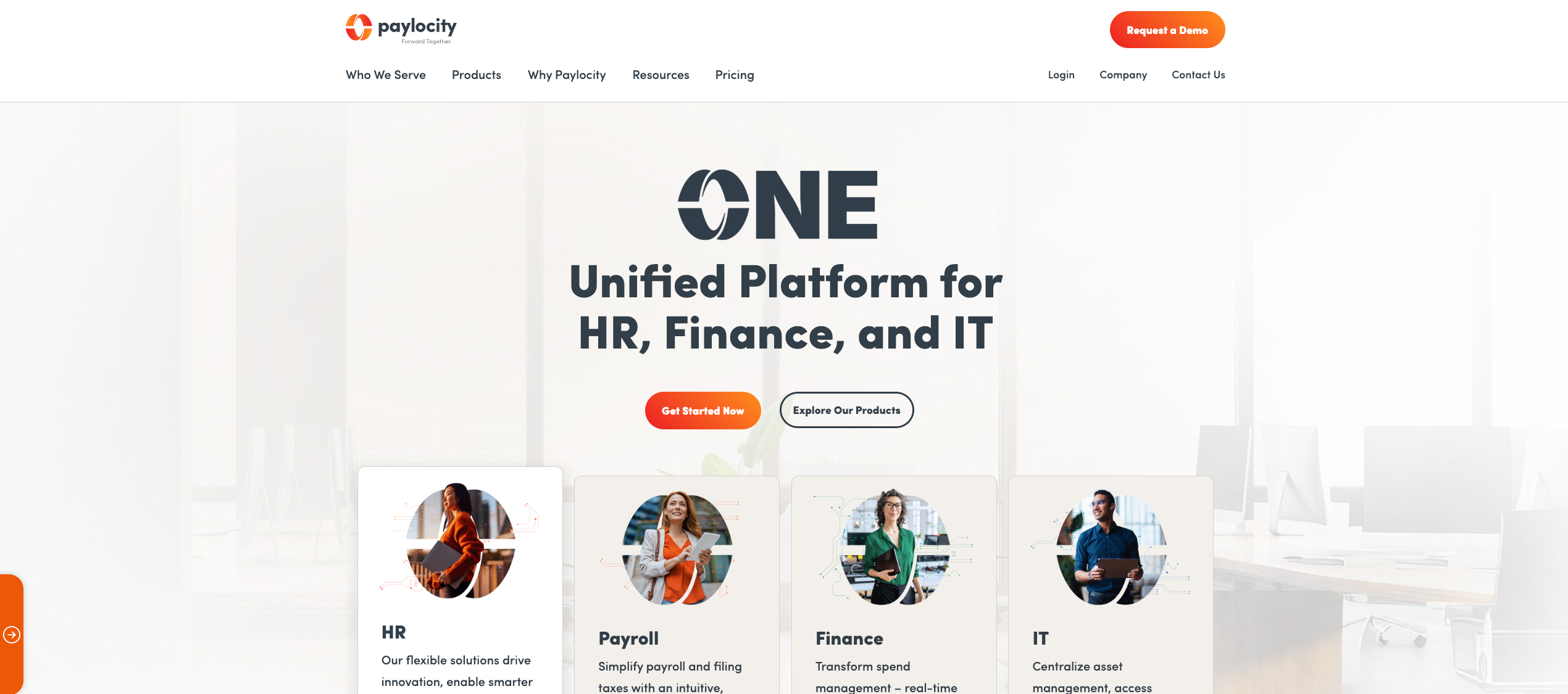
Best for: Mid-market teams wanting modern HR with strong employee engagement
Paylocity has carved out a strong position in the mid-market by combining payroll, HR, and culture-building tools in one system. It’s particularly well-regarded for its communication and employee engagement features, making it popular with teams that want more than transactional HR from their platform.
What Paylocity offers:
- Unified payroll, benefits, time and attendance, and talent management
- Built-in peer recognition, surveys, and community tools for employee engagement
- On-demand pay access for earned wages
- Strong mobile app with self-service for schedules, time off, and payroll
- 350+ integrations with third-party platforms
Considerations:
The clock-in/clock-out feature can be unreliable. If the signal isn’t perfect, it might not register a punch, causing missed clocks. For hourly workers whose pay depends on accurate time records, that’s a meaningful gap. Paylocity’s scheduling depth is also similar to Paycor and Paycom: solid for standard environments, limited for complex or high-volume shift operations.
8. Paychex Flex
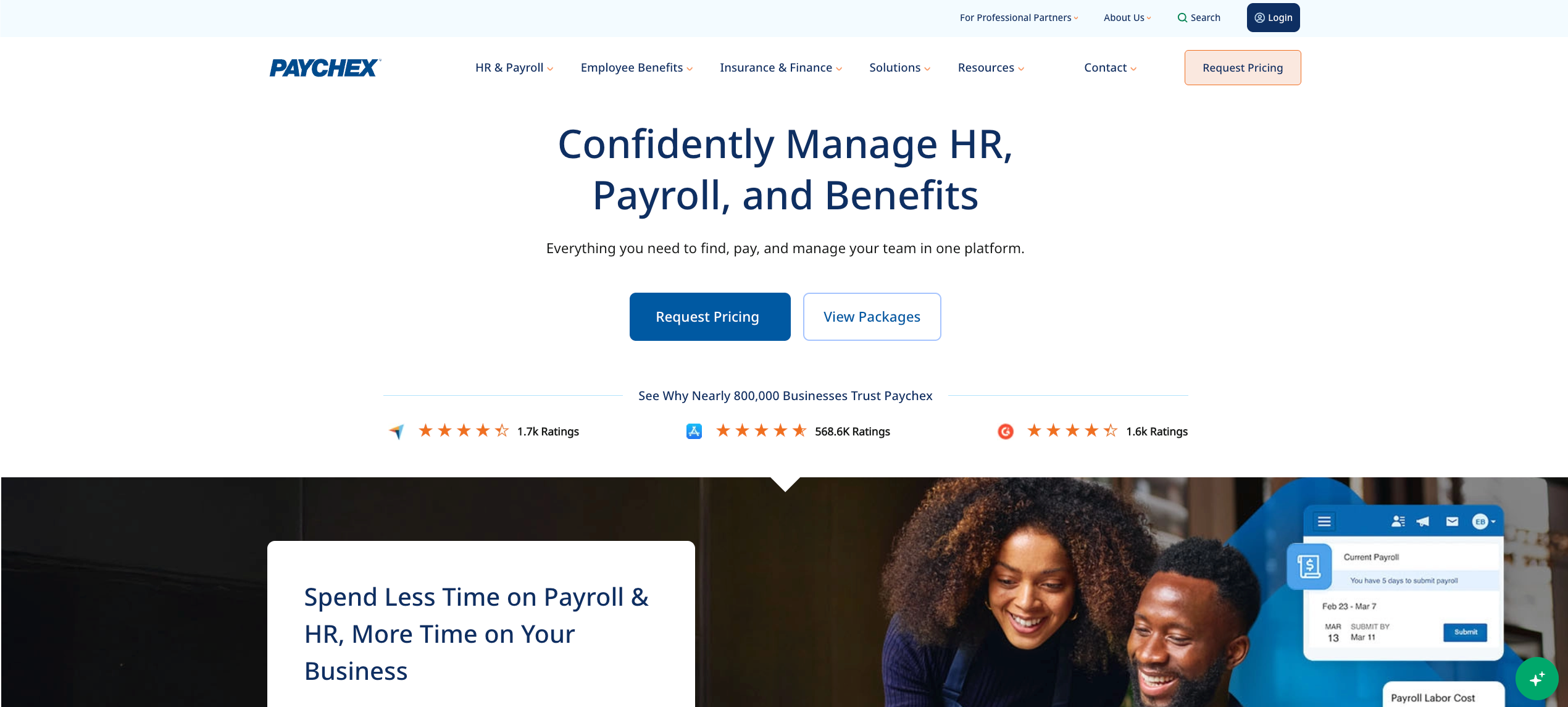
Best for: Small to mid-sized businesses wanting flexible HR with strong compliance support
Paychex Flex is one of the most widely used HR and payroll platforms for small and mid-sized businesses. Its core strength is compliance, drawing on decades of experience with tax regulations, multi-state payroll, and PEO services. For teams that want reliable payroll with expert HR support available on demand, it’s a dependable choice.
What Paychex Flex offers:
- Automated payroll processing with multi-state tax compliance and direct deposit
- HR tools covering onboarding, benefits administration, and time tracking
- PEO services for businesses that want to outsource HR administration entirely
- 24/7 customer support with access to dedicated HR professionals
- Analytics and customizable reporting for workforce insights
Considerations:
The app can take up to five minutes to load before clocking in or out, which may result in delayed or missed punches. Like most payroll-first platforms, its scheduling and shift management depth is limited. Teams with complex hourly workforce operations will find it serves the payroll side well but needs a specialized WFM tool alongside it.
9. isolved
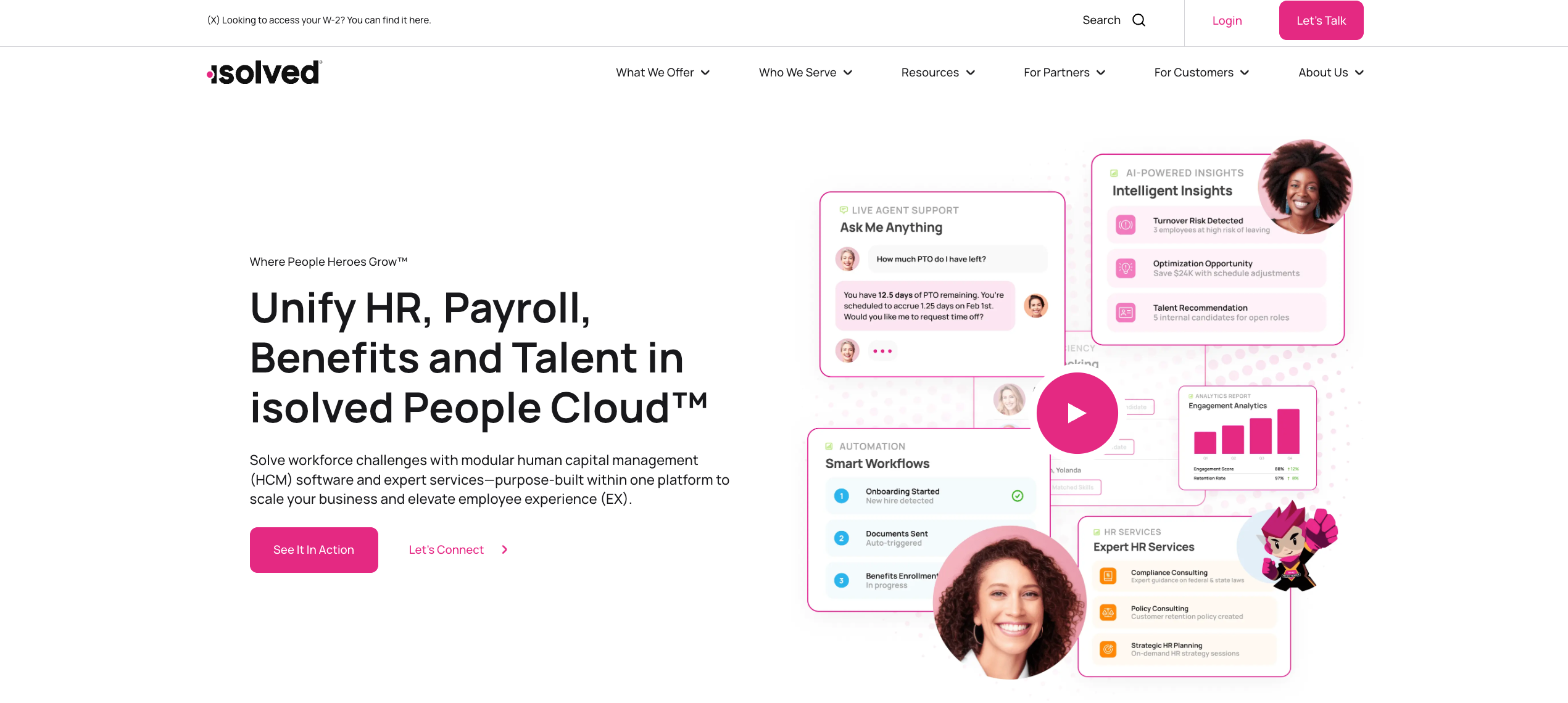
Best for: Small to mid-sized businesses wanting an all-in-one HCM platform
isolved People Cloud is a comprehensive HCM platform that manages the full employee lifecycle from pre-hire to retire in a single application. It’s known for combining payroll, HR, benefits, time and attendance, and talent management without requiring multiple disconnected systems, making it a clean alternative for organizations moving off fragmented toolsets.
What isolved offers:
- Unified HCM platform covering payroll, HR, benefits, and time and attendance
- Talent acquisition, onboarding, and performance management tools
- Built-in employee engagement features through its Mojo module
- Compliance monitoring with automated alerts for regulatory changes
- Scalable architecture for businesses growing from 50 to several thousand employees
Considerations:
isolved is well-suited for organizations with relatively standard HR and payroll needs. For teams that need robust scheduling for hourly or shift-based workers, real-time labor cost visibility, or contingent workforce management, its depth in those areas doesn’t match purpose-built WFM platforms.
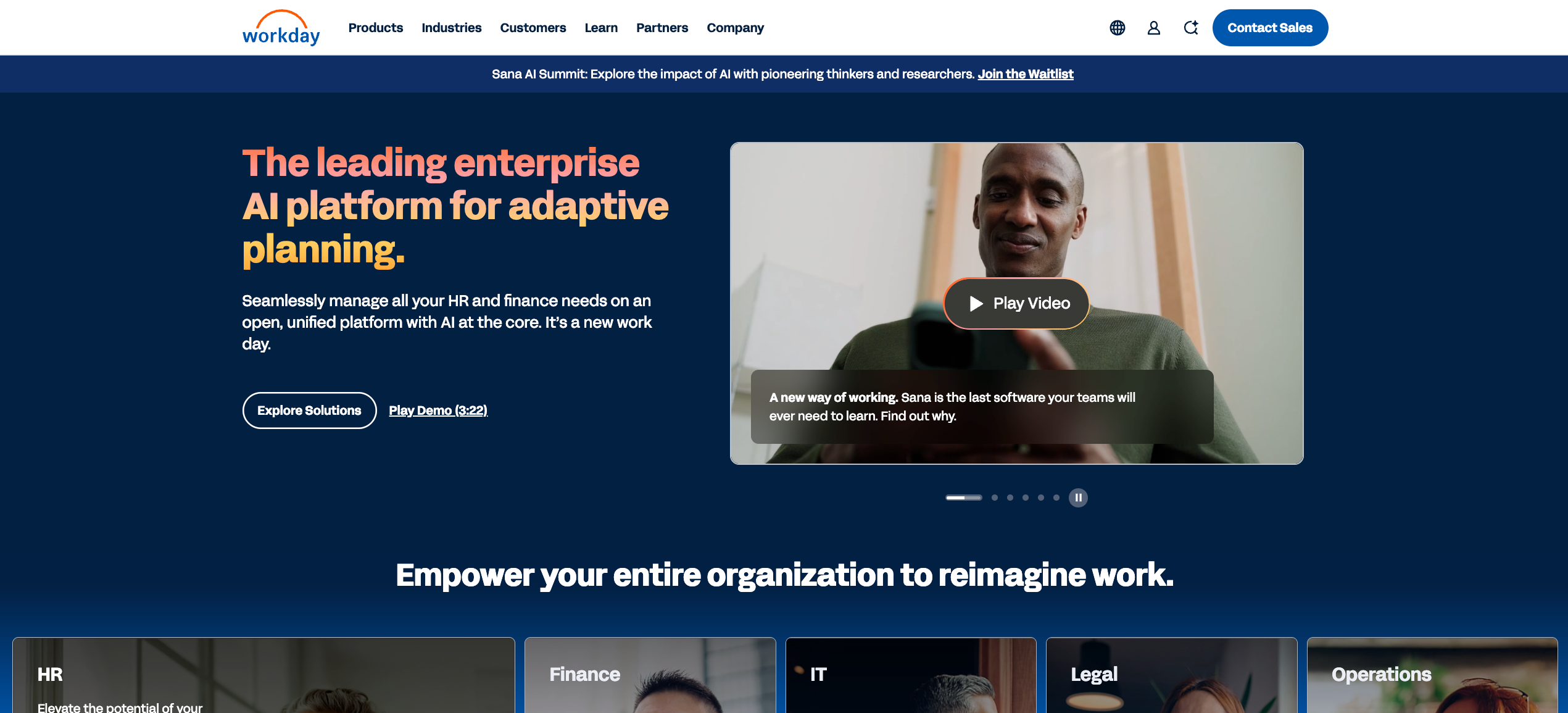
10. Workday HCM
Best for: Large global enterprises connecting HR strategy to financial planning
Workday is the enterprise-grade benchmark that most large organizations evaluate when replacing legacy HCM platforms. It connects core HR, payroll, talent management, and workforce planning in a single cloud-native architecture with global scale and AI-driven analytics built in.
What Workday HCM offers:
- Unified platform connecting HR, payroll, talent, and financial planning
- AI-powered workforce analytics with predictive modeling and skills mapping
- Global payroll and compliance support across 190+ countries
- Advanced succession planning, learning management, and career development
- 600+ pre-built integrations with enterprise systems
Considerations:
Workday’s implementation typically spans 6 to 18 months, and its scheduling tools require significant configuration to serve hourly or shift-based teams effectively. It’s built for strategic HR at enterprise scale, not for the operational speed that shift-based operations demand. For teams that need fast, accurate, shift-level management, the effort-to-value ratio doesn’t hold up.
11. BambooHR
Best for: Small teams wanting simple, intuitive HR software
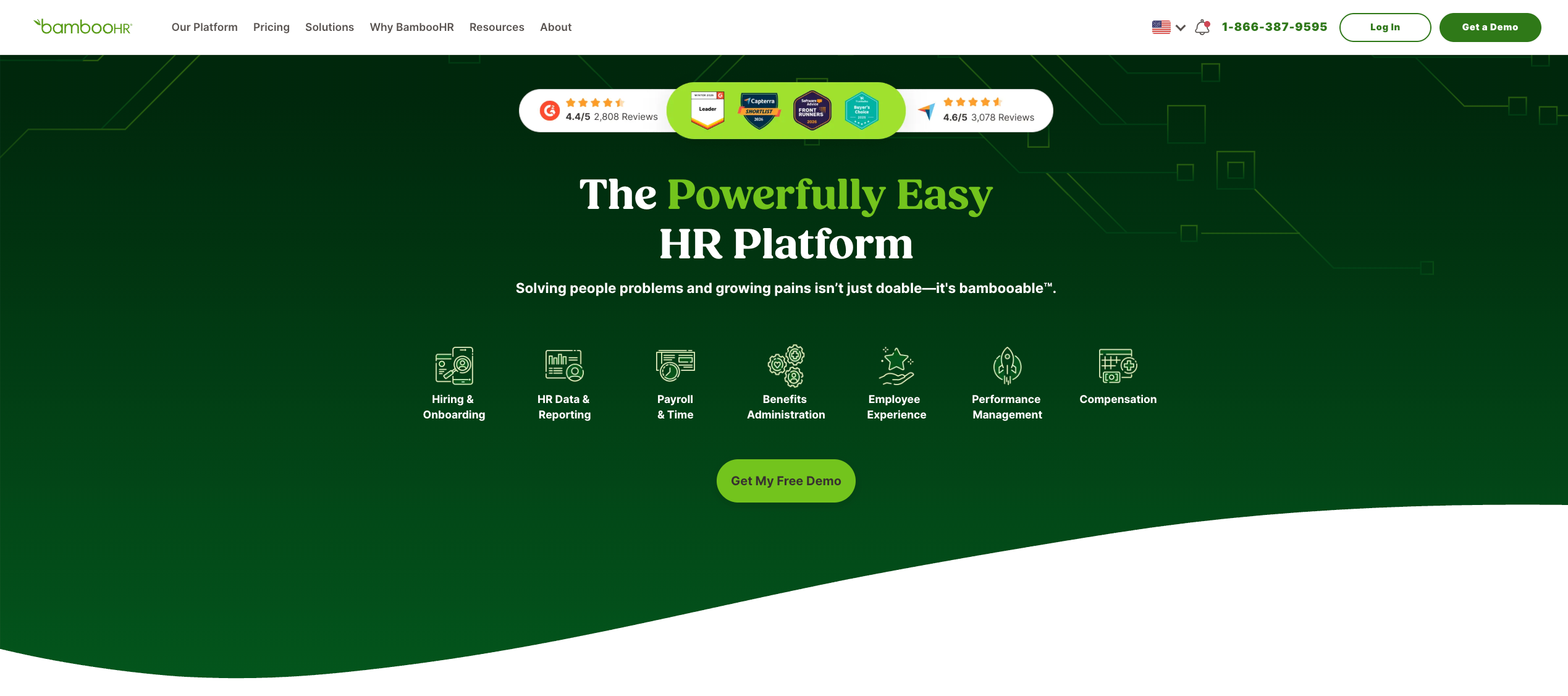
BambooHR is one of the most user-friendly HRIS platforms available, designed specifically for small to mid-sized businesses that want modern HR tools without enterprise complexity. It’s fast to implement, easy to navigate, and covers the core HR functions that lean teams rely on daily.
What BambooHR offers:
- Centralized employee records, onboarding, and performance management
- Time tracking and PTO management with clean self-service tools
- Applicant tracking and basic hiring workflows
- Employee satisfaction surveys and culture features
- Fast setup with minimal IT involvement required
Considerations:
BambooHR doesn’t include meaningful scheduling or shift management capabilities, and its payroll is limited in scope compared to dedicated payroll platforms. For stable, mostly salaried teams with predictable HR needs, it’s a strong fit. For operations managing variable shifts, contingent workers, or multi-location hourly workforce management, it hits a ceiling quickly.
How Each Platform Handles Scheduling, Time Tracking, and Compliance
When you’re evaluating workforce management solutions to replace ADP Workforce Now, payroll management capabilities are table stakes. Every platform on this list handles payroll and HR functions at a baseline level. The real differentiator is what happens at the operational layer: how fast can you build a schedule, how accurately does the system track time, and how confidently can you manage employees across shifting compliance requirements?
Here’s the breakdown across all three functions.
Scheduling: Where Most Platforms Reveal Their True Identity
Most cloud-based payroll platforms include scheduling as a module. The question is whether that module was designed for real operational complexity or just to complete a feature checklist. For teams managing employees across multiple locations, shifts, and vendors, the gap between a scheduling module and a scheduling-first platform is enormous.
Strong scheduling depth:
- Nowsta is the only platform on this list built around the shift as the primary unit of work. Its AI-powered shift scheduling engine factors in availability, skills, certifications, labor budgets, and compliance rules simultaneously, building optimized schedules in minutes. Teams cut scheduling time by 80% and eliminate the manual work of coordinating dozens of workers. For event professionals, hospitality teams, and warehousing operations, this is the level of scheduling depth that actually moves the needle.
- UKG Pro offers advanced demand-based scheduling with machine learning, making it strong for healthcare and manufacturing environments with complex shift patterns and union rules.
- Dayforce provides AI-assisted scheduling with demand forecasting, though it requires significant configuration to reach its full potential for high-volume operations.
- Workday HCM covers scheduling but is configured for salaried workforces by default. Hourly teams require substantial setup time before getting real value.
- Rippling, Paycor, Paycom, and Paylocity all include shift scheduling as a feature, but none were designed around it. They work for standard, predictable shift patterns and struggle when demand becomes variable or multi-vendor.
- Paychex Flex and isolved cover basic scheduling and attendance tracking, primarily as a support function for payroll rather than an operational tool.
- BambooHR has no meaningful scheduling capability for shift-based teams.
Time Tracking: The Link Between Operations and Accurate Compensation
Inaccurate time tracking creates a chain reaction that ripples through payroll, compliance, and worker trust. Accurate compensation depends on accurate records, and accurate records depend on a time tracking system that works reliably in the environments where your workers actually operate.
| Platform | Time Tracking Method | GPS Verification | Payroll Integration | Real-Time Visibility |
|---|---|---|---|---|
| Nowsta | Mobile, GPS-geofenced | Yes | Seamless, native | Yes |
| UKG Pro | Mobile, badge, biometric, kiosk | Yes | Native | Yes |
| Dayforce | Mobile, web, time clocks | Limited | Native, real-time | Yes |
| Workday HCM | Mobile, web | Limited | Native | Yes |
| Rippling | Web, mobile | No | Native | Yes |
| Paycor | Mobile, web, time clocks | Yes | Native | Yes |
| Paycom | Mobile, web | Limited | Native | Yes |
| Paylocity | Mobile, web, kiosks | Limited | Native | Yes |
| Paychex Flex | Mobile, web, time clocks | Limited | Native | Moderate |
| isolved | Mobile, web, time clocks | Limited | Native | Moderate |
| BambooHR | Web, mobile | No | Via integration | Limited |
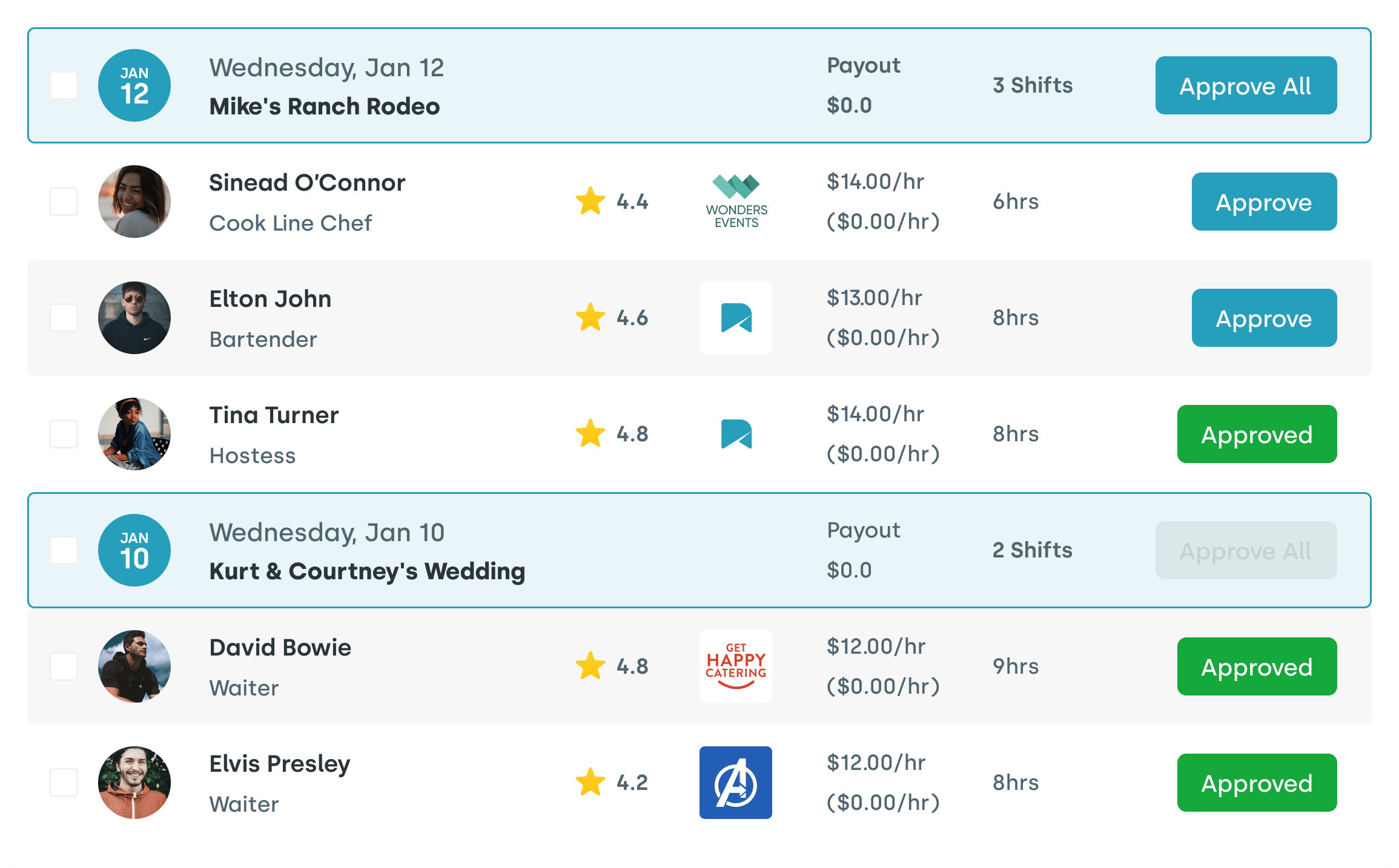
Nowsta’s GPS-verified, geofenced clock-in is a meaningful differentiator for field-based and event-based operations. It eliminates buddy punching, automatically flags late arrivals and no-shows in real time, and feeds approved hours directly into payroll with no manual exports required. For operations managing employees across multiple venues or job sites, that accuracy is the difference between clean payroll and constant corrections.
Compliance: Built Into the Workflow vs. Added On Top
Every platform on this list claims compliance coverage. The more important question is where in the workflow that compliance is enforced. A system that flags violations after a schedule is published is less valuable than one that prevents violations before a shift is ever assigned.
- Nowsta automates compliance monitoring at the scheduling and time tracking level. Labor law alerts, overtime thresholds, and break requirement rules fire in real time, before they become violations. Every clock-in, shift change, and timesheet approval creates an automatic audit trail. For teams managing employees across multiple states or in industries with layered compliance requirements, that’s not just convenient. It’s a legal safeguard.
- Dayforce is one of the strongest enterprise platforms for compliance, with continuous payroll calculation and global coverage across 200+ territories. Its tax filing automation and regulatory update engine are genuine strengths.
- UKG Pro handles multi-state rules, union agreements, and predictive scheduling regulations natively, making it well-suited for healthcare and manufacturing environments.
- Workday HCM provides compliance infrastructure across 190+ countries for global workforce management, though its depth for shift-level operational compliance requires heavy configuration.
- ADP Workforce Now (for reference) has strong tax filing and payroll compliance history, but its shift-level compliance enforcement has gaps, particularly for high-volume hourly operations.
- Paycor, Paycom, and Paylocity all include compliance monitoring, primarily for payroll and HR. None were built for real-time, shift-level compliance enforcement at scale.
- Paychex Flex is known for responsive customer support around compliance questions, with dedicated HR professionals available on demand, though its automated enforcement is limited compared to purpose-built WFM tools.
- isolved and BambooHR cover compliance for HR tasks and employee records, but lack meaningful depth for labor law enforcement in hourly work environments.
Read more: Nowsta Solves Compliance Challenges for Contingent Workforce Management
Which Tools Work Best for Shift-Based and Hourly Workforces
Most ADP Workforce Now alternative comparisons are written for HR directors evaluating payroll software options. They compare tax filing accuracy, performance reviews depth, and applicant tracking system features. What they rarely address is the reality that a large segment of the market doesn’t primarily need any of those things. They need to staff a 200-person event on Thursday without anyone calling out.
The Hourly Workforce Has Different Needs
Managing employees in shift-based and hourly environments means operating under a completely different set of pressures than managing a salaried office workforce:
- Schedules change daily, not quarterly
- No-shows have immediate operational and financial consequences
- High turnover means constant employee onboarding and worker pool management
- Multi-location or multi-vendor operations require coordination; no standard HR management platform handles natively
- Compliance exposure is disproportionately high for hourly and non-exempt workers
Most enterprise HR platforms were architected around the employee self-service portal needs of salaried workers: performance evaluations, job posting workflows, performance reviews cycles, and career development pathways. Those tools have real value. But they don’t address what happens when three workers don’t show up at 6 AM.
Platform Fit by Workforce Type
Let’s go through each platform:
Nowsta: Purpose-built for this
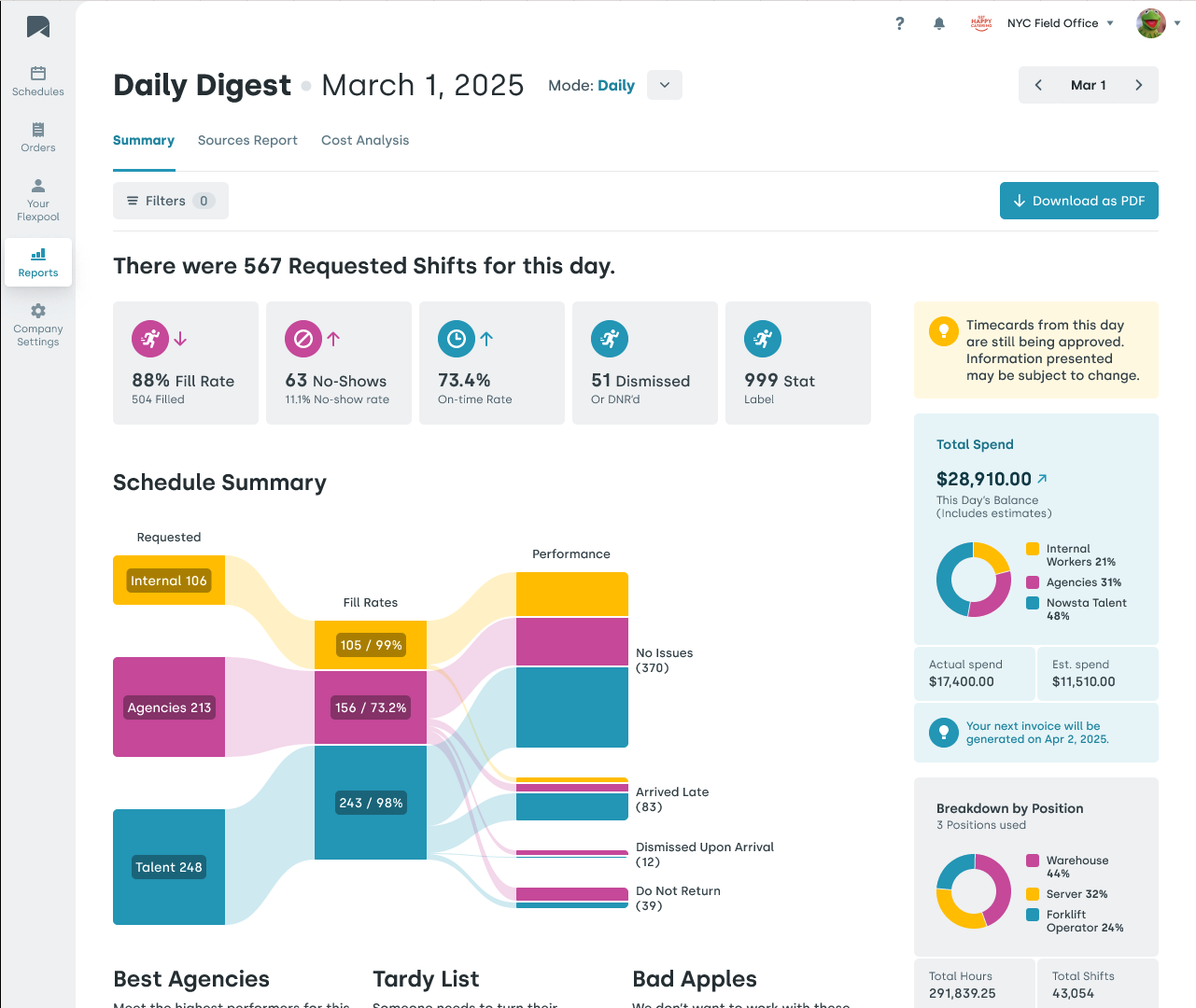
Every key feature in Nowsta was designed with hourly and contingent operations in mind. AI scheduling that accounts for skills and availability in real time. GPS-verified attendance tracking with no manual reconciliation.
Talent intelligence that ranks workers by reliability and past performance. A user-friendly interface that workers actually use on their phones. And a vendor management system that gives operations teams full visibility into agency spend and performance from a single screen.
For catering companies, hotels, and hospitality teams, event staffing agencies, warehousing operations, and home healthcare organizations, Nowsta is the platform designed for exactly how they operate. Not an enterprise HR suite with scheduling bolted on. A workforce management platform with payroll and HR functions built around the shift.
Case Study: OTH Company
OTH Company scaled event staffing operations nationwide using Nowsta, bringing structure and visibility to a high-volume, multi-market workforce.
Read their story →
UKG Pro: Strong for large, complex shift environments
UKG Pro handles shift-based operations better than most enterprise HR platforms. Its scheduling depth is genuine, particularly for healthcare, retail, and manufacturing environments. The tradeoff is a 3 to 12 month implementation timeline, a steep learning curve, and a cost structure that requires dedicated HR and IT support to maintain. It’s built for large enterprises that can absorb that overhead.
Dayforce: Capable but configuration-heavy
Dayforce handles hourly workforce management reasonably well, particularly where real-time payroll accuracy is the priority. Its compliance and attendance tracking tools are strong. The barrier is implementation complexity and a scheduling module that can struggle under high-volume, variable shift conditions. Teams that need to move fast won’t find that speed here.
Rippling: Technology-forward but not floor-ready
Rippling excels at automating HR, IT, and finance workflows for technology-forward organizations. Its time tracking tools don’t adapt well to irregular shift patterns, and its mobile experience wasn’t built for workers clocking in from a venue or job site. Managing employees in a shift-heavy environment requires more from a mobile app than Rippling currently delivers.
Paycor and Paycom: Mid-market solid, not shift-specialized
Both platforms serve medium-sized businesses well for payroll and core HR. They support basic scheduling and attendance tracking, with an intuitive interface and strong employee self-service portal functionality. But neither was designed for the dynamics of contingent or event-driven workforce management. Teams where scheduling is a core daily function will hit operational limits quickly.
Paylocity: Good for culture, limited for the floor
Paylocity’s employee engagement tools and communication features are genuinely strong. For teams that prioritize culture-building alongside HR management, it’s a thoughtful platform. For operations that need robust scheduling, real-time attendance tracking, and advanced analytics on labor costs across dozens of simultaneous shifts, it falls into the same category as Paycor and Paycom.
Paychex Flex and isolved: Reliable payroll, limited WFM depth
Both platforms are strong payroll solutions with reliable tax filing and compliance support. They cover basic attendance tracking and time management for hourly workers, but neither was built for the operational demands of high-volume, shift-based workforce management. They work well as the payroll solution alongside a purpose-built WFM tool.
Workday HCM: Built for strategic HR, not operational shifts
Workday’s strength is connecting HR strategy to financial outcomes at enterprise scale. Its scheduling tools require significant configuration to serve hourly teams, and its implementation timeline of 6 to 18 months doesn’t match the pace that shift-based operations demand. The platform enables organizations to do a lot, just not the specific things that matter most when you’re managing 50 workers across a venue on Saturday night.
BambooHR: Wrong tool for shift-based teams
BambooHR is a clean, user-friendly interface for stable, salaried-leaning environments. It handles HR tasks well within its lane. For hourly workforce management, it simply doesn’t have the key features that shift-based operations require.
The Purpose-Built Option Most Lists Never Mention
Most ADP Workforce Now alternative comparisons are structured around a single axis: which enterprise payroll software comes closest to replacing what ADP does. They compare payroll management depth, performance evaluations workflows, and applicant tracking system capabilities. It’s a useful comparison for HR directors at mid-to-large enterprises. It doesn’t help the operations manager trying to staff a 300-person event by Friday.
That’s the gap Nowsta was built to fill.
A Different Philosophy Entirely
Every platform on this list starts with HR management and builds scheduling outward. Nowsta starts with the shift and builds everything else outward from there. The operational logic is completely different, and it shows in every key feature the platform delivers.
Most workforce management solutions treat hourly workers as a category within a broader HCM strategy. Nowsta treats them as the core user. That means:
- Scheduling that executes at operational speed. Teams build and fill complex schedules in minutes, not hours. AI handles the heavy lifting while managers stay in control. No text chains. No spreadsheet exports. No manual work between scheduling and payroll.
- Attendance tracking that doesn’t require trust. GPS-verified clock-ins eliminate buddy punching and time theft at the source. Every punch is verified, logged, and automatically fed into payroll. For operations managing employees across multiple venues or locations, that accuracy is the operational foundation everything else is built on.
- Talent intelligence that goes beyond employee management. Nowsta doesn’t just track workers. It tracks performance. Reliability scores, certification status, past attendance, and shift history all inform who gets assigned to what role. Over time, operations teams build a ranked talent pool that gets smarter with every shift.
- Vendor management built natively. Most enterprise HR platforms don’t support contingent workforce operations at the vendor level. Nowsta’s vendor management platform handles agency spend, performance tracking, compliance, and automated invoicing in one system. For operations teams that rely on staffing agencies, this is the difference between visibility and guesswork.
- Payroll and HR functions that connect directly. Nowsta integrates seamlessly with existing payroll software, so approved hours flow directly into accurate compensation without manual re-entry. That seamless payroll integration cuts processing time by 90% and eliminates the reconciliation overhead that most HR management teams absorb every pay cycle.
- A mobile-first experience workers actually use. The employee self–service portal in Nowsta is designed for the floor, not the office. Workers access schedules, claim open shifts, clock in with GPS, and receive reminders from their phones. Teams using Nowsta’s customized notifications see 35% higher engagement rates and 28% fewer no-shows.
The Business Case Is Simple
The hidden cost of no-shows, scheduling errors, and manual payroll reconciliation adds up fast. For a team running 100 shifts a week, even small inefficiencies compound into significant labor cost exposure over a year. Nowsta reduces scheduling time by 80%, cuts labor costs by up to 15%, and eliminates unplanned overtime through real-time budget alerts that fire before overspending happens.
That’s not HR software adding operational efficiency at the edges. That’s a platform purpose-built to make every shift more profitable, more compliant, and easier to staff than the last one.
Who Gets the Most Value
Nowsta delivers the strongest business outcomes for:
- Event staffing agencies managing high volumes of workers across simultaneous events
- Catering and hospitality companies with variable demand and high worker turnover
- Warehousing and distribution operations running multiple shifts across locations
- Hotels and venues managing a mix of full-time staff and contingent labor
- Universities and healthcare organizations with large pools of hourly or part-time workers
If your current system involves any manual work between scheduling, attendance tracking, and payroll, that’s labor cost being lost on every single shift. Nowsta eliminates those gaps with advanced analytics on labor spend, real-time visibility on who’s on shift, and data analysis that supports informed decision-making at every level of the operation.
Most enterprise HR platforms on this list were built for HR departments. Nowsta was built for the people managing the operation. Schedule a demo and see what workforce management looks like when it’s designed around how your team actually works.
Your Next Workforce Management Move Starts With Nowsta
Not every team leaves ADP Workforce Now for the same reason. Some need better scheduling depth. Some need a platform that actually works on mobile. Some just need something built for how hourly operations run. Whatever your reason, the right alternative exists.
Key takeaways from this guide:
- ADP Workforce Now is reliable for payroll and core HR, but falls short on scheduling depth, mobile experience, and customer support consistency
- UKG Pro and Dayforce offer stronger WFM capabilities but come with enterprise-level complexity and implementation timelines
- Rippling, Paycor, and Paycom are solid mid-market options, but weren’t built for shift-based or contingent workforce operations
- Paylocity and Paychex Flex serve their lanes well, but need purpose-built WFM tools alongside them for hourly workforce management
- Most comparison lists skip the platforms actually designed for shift-based, hourly, and contingent operations
If your operation runs on shifts, Nowsta is worth a serious look. It was built specifically for the workforce management challenges that ADP Workforce Now was never designed to solve: AI scheduling, GPS-verified time tracking, vendor management, and real-time labor cost visibility all in one place. Schedule a demo and see the difference.
Frequently Asked Questions
What is the best workforce management software?
The best workforce management software depends on your operation. For enterprise HR with deep talent management and employee development tools, Workday or UKG Pro lead.
For teams needing to reduce administrative burden, automate routine tasks, and manage hourly or contingent workers at the shift level, Nowsta is the strongest purpose-built option. It handles scheduling, GPS time tracking, compliance, and seamless payroll integration in one platform, with custom pricing tailored to your operation’s size and needs.
Who is ADP’s biggest competitor?
UKG Pro is widely considered ADP’s biggest direct competitor. Both offer enterprise-grade payroll and HR management covering the full employee lifecycle, including managing employee data, tax filing, benefits, and compliance.
Dayforce and Workday HCM are also strong rivals, particularly for large organizations managing international employees across multiple jurisdictions. For shift-based and hourly workforce operations specifically, Nowsta competes in a different lane entirely, one that ADP was never built for.
What are the top 5 HRMS systems?
The top five HRMS systems in 2026 are widely considered to be Workday HCM, UKG Pro, Dayforce, ADP Workforce Now, and SAP SuccessFactors. All five offer comprehensive HR management, payroll, benefits, and talent tools for mid-to-large organizations.
They vary significantly in implementation fees, transparent pricing availability, and depth of workforce management capabilities. For operations requiring shift scheduling, attendance tracking, and contingent workforce management, purpose-built platforms like Nowsta complement or replace these systems more effectively.
Does switching from ADP require a lot of time and resources?
It depends on the platform you’re moving to. Enterprise HCM platforms like Workday or UKG Pro typically carry significant implementation fees, lengthy setup timelines, and demand dedicated training resources and IT support. Simpler mid-market tools like Paycor or Paylocity reduce that hr workload considerably. Nowsta is designed for fast implementation, with an intuitive interface that minimizes the learning curve for managers and workers alike.
Because it focuses on shift management rather than broad enterprise HR, the transition is more targeted, and teams typically see operational value without the months of configuration that enterprise systems require. Custom pricing is available based on your team size, industry, and the specific task management and workforce features you need.